
NEW MEMBER LUU CAPTURES CGTF CUP


By Marc Ray, President, Canadian Golf Teachers Federation

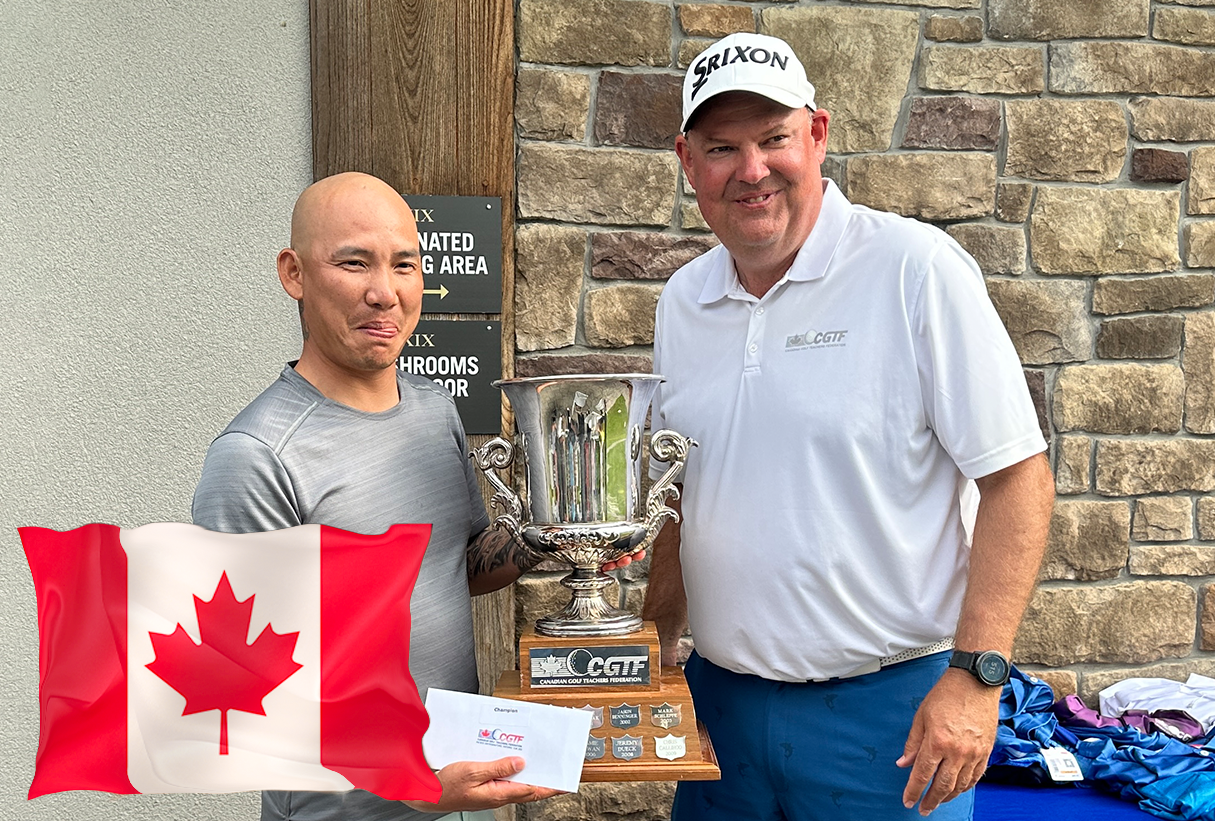
A big thank you to all CGTF members who made the trip to Belleville for this year’s CGTF Cup, held June 11th, at the beautiful Bay of Quinte Golf Club. The golf course was a treat to play, showcasing nine brand-new holes. It was another fantastic sunny day filled with great golf, great company and plenty of laughs.

We’re proud to announce that the 2025 CGTF Cup champion is Ryan Luu, a new CGTF member who wasted no time making his mark at the tournament. Congratulations, Ryan, on your impressive play and well-deserved win! Ryan was able to hold off Jay Middleton by one stroke coming down the stretch as they were in the same group.

A huge thanks to everyone who helped make the event a success, including those who joined us at Oak Hills Golf Club the day before for range time and a fun round. USGTF Master Professional Jim Peters was our special guest, travelling up from Kentucky to show his support of the online CGTF Continuing Education that he values each winter. Events like this continue to showcase the strength and spirit of our growing teaching community.

We are looking forward to seeing everyone again next year.
REGION UPDATE

This month will feature the United States Golf Teachers Cup to be played at Stallion Mountain Golf Course in Las Vegas, Nevada, September 22-23. Although the entry deadline has passed, we are confident that interest in the latest edition will be high and the competition will be keen.


The USGTF Southwest Region Championship will be held Saturday and Sunday, September 6-7, at The Golf Club at Twin Creeks in Allen, Texas, just north of Dallas. There will be a practice round on Friday, September 5, with a meet and greet later that evening at 6:00 p.m. The entry fee is $250 with an optional $20 skins game each day. For more information and to enter, please contact region director Bruce Sims at bsims@pga.com.

How 1DollarDepositCasinos Explains Low Deposit Gaming in New Zealand

New Zealand’s online gambling market has undergone substantial transformation over the past decade, particularly in how operators structure their minimum deposit requirements. Where once NZ$20 or NZ$30 was considered a modest entry point, a growing segment of the market now accommodates players who want to begin with as little as one New Zealand dollar. This shift is not purely cosmetic — it reflects deeper changes in payment infrastructure, regulatory interpretation, and the demographics of players who are increasingly cautious about committing large sums to platforms they have not yet fully evaluated. Understanding why low-deposit gaming has taken hold in New Zealand, and how informational resources have helped players navigate it, requires looking at both the structural conditions of the local market and the practical realities of how these casinos operate day to day.

The Regulatory Context Behind Minimum Deposit Structures in New Zealand

New Zealand’s gambling legislation is built primarily around the Gambling Act 2003, a framework that governs land-based gambling operations domestically but does not explicitly regulate offshore online casinos targeting New Zealand residents. This legal ambiguity has created a situation where New Zealand players can legally access offshore platforms without those platforms being required to hold a New Zealand-issued licence. The Gambling Commission, which oversees domestic operations, has jurisdiction over entities like the New Zealand Lotteries Commission and TAB New Zealand, but its reach does not extend to Malta Gaming Authority or UK Gambling Commission-licensed operators who accept NZ dollars.

This regulatory gap has had a direct effect on deposit structures. Because offshore operators are not subject to domestic minimum deposit mandates from a New Zealand authority, they have been free to experiment with their entry-level requirements. The result has been a competitive environment where operators attempt to differentiate themselves through accessibility, and minimum deposit thresholds have become one of the primary levers for doing so. A casino licensed in Curaçao or Malta that accepts New Zealand players can set a NZ$1 minimum deposit without needing approval from any New Zealand regulatory body — it only needs to comply with its home jurisdiction’s rules, which typically focus on player verification, anti-money laundering compliance, and responsible gambling disclosures rather than deposit floor limits.

It is worth noting that the New Zealand government has been reviewing its online gambling framework for several years. A Department of Internal Affairs consultation in 2021 flagged the need to address offshore gambling more directly, and subsequent discussions have pointed toward a potential licensing regime for offshore operators. If such a regime is introduced, it could impose new requirements on deposit structures, bonus terms, or responsible gambling tools that might affect the viability of one-dollar deposit models. For now, however, the absence of that framework means low-deposit casinos operate in a permissive environment from a New Zealand regulatory standpoint.

How Payment Processing Enables One-Dollar Deposits

The practical mechanics of a NZ$1 deposit are more complex than they might appear. Traditional bank transfers and credit card payments carry processing fees that can render very small transactions economically unviable for operators. A NZ$1 deposit processed through a standard credit card gateway might incur a flat fee of NZ$0.30 to NZ$0.50 plus a percentage of the transaction value — meaning the operator receives less than the face value of the deposit and must absorb that cost or pass it on in ways that affect player value. This is one reason why one-dollar deposits were largely impractical before the widespread adoption of e-wallets and alternative payment methods.

The expansion of services like Paysafecard, Neosurf, and various cryptocurrency payment options changed this calculus significantly. Neosurf, in particular, became popular in the New Zealand market because it allows players to purchase prepaid vouchers at retail locations and redeem them online without linking a bank account. The fee structure for Neosurf and similar voucher systems is different from traditional card processing, making small transactions more feasible. Cryptocurrency payments, which became more accessible to mainstream users between 2017 and 2022, introduced another pathway: blockchain transactions can be processed for fees that are independent of the dollar value being transferred, meaning a NZ$1 equivalent in Ethereum or Bitcoin can be processed at roughly the same cost as a NZ$100 transaction.

Resources like http://1-dollar-deposit-casinos.com/ have documented which payment methods actually support minimum deposits at specific casinos, filling an information gap that operator terms and conditions pages often leave open. It is common for a casino to advertise a NZ$1 minimum deposit in its headline marketing while burying in the fine print that this minimum only applies to Neosurf or a specific e-wallet, not to Visa or bank transfer. Players who do not know this in advance may attempt a small deposit through their preferred method, find it rejected or subject to a higher minimum, and form a negative impression of the platform. Aggregated, independently maintained information about payment method compatibility at the deposit level serves a genuine practical function in this context.

Operators who genuinely support one-dollar deposits across multiple payment methods have typically made a deliberate business decision to prioritize player acquisition volume over per-player deposit value. The logic is straightforward: a player who begins with NZ$1 and has a positive experience is likely to return and deposit larger amounts over time. The initial deposit functions more as a trial mechanism than a revenue event. This is a model borrowed in part from freemium digital products, where the cost of acquiring a user is accepted upfront in exchange for longer-term retention value.

What 1DollarDepositCasinos Tracks and Why It Matters to New Zealand Players

Informational platforms that focus specifically on low-deposit gaming serve a distinct function from general casino review sites. A comprehensive review site might evaluate dozens of criteria across hundreds of casinos, producing broad assessments of overall quality. A platform focused on minimum deposit thresholds, by contrast, performs a narrower but more precise function: it tracks the specific conditions under which a stated minimum deposit is actually achievable, and it monitors changes to those conditions over time.

1DollarDepositCasinos has approached this by examining not just the headline minimum deposit figure but the full set of conditions attached to it. This includes which payment methods qualify for the minimum, whether bonuses are available at the minimum deposit level or require a higher threshold to activate, what the wagering requirements are on any bonus attached to a minimum deposit, and whether the minimum deposit is the same for withdrawals or whether a higher minimum applies when cashing out. These distinctions matter considerably in practice. A player who deposits NZ$1 and receives a bonus might find that the bonus requires a NZ$20 withdrawal minimum to access winnings, effectively negating the benefit of the low entry point.

The New Zealand market has specific characteristics that make this kind of detailed tracking particularly useful. New Zealand players tend to use a relatively concentrated set of payment methods compared to markets like the United Kingdom or Germany. Visa and Mastercard remain widely used, but a significant portion of online gambling transactions run through Paysafecard and Neosurf due to their availability at convenience stores and petrol stations throughout the country. Understanding which casinos support these methods at the NZ$1 level, rather than requiring NZ$10 or NZ$20 for card-based deposits, is information that directly affects which platforms are genuinely accessible to a given player.

There is also the question of currency conversion. Not all casinos that accept New Zealand players operate in NZ dollars natively. Some process transactions in USD or EUR and apply a conversion rate, which can mean that a stated minimum deposit of US$1 translates to slightly more or less than NZ$1 depending on current exchange rates and any fees applied by the payment processor. Platforms that track minimum deposits in the context of the New Zealand market need to account for this, distinguishing between casinos that genuinely operate in NZ dollars and those where the effective minimum deposit in local currency may differ from the advertised figure.

Player Behaviour and the Psychology of Low-Threshold Entry Points

Research into gambling behaviour has consistently identified the initial deposit decision as a critical moment in the player journey. A 2019 study published in the International Gambling Studies journal examined how deposit thresholds influenced player engagement patterns and found that lower entry points correlated with higher first-time deposit conversion rates but did not necessarily predict higher lifetime player value. This finding is significant because it suggests that one-dollar deposit casinos are effective at attracting new players but face the same retention challenges as any other operator once the initial novelty wears off.

For New Zealand players specifically, the low-deposit model addresses a particular concern that surveys of online gamblers in the Asia-Pacific region have repeatedly identified: distrust of unfamiliar platforms. New Zealand’s online casino market is dominated by offshore operators, many of which have limited brand recognition among local players. A player encountering a new platform for the first time has no direct experience of how it handles withdrawals, whether customer support is responsive, or whether the game library performs reliably on a New Zealand internet connection. Depositing NZ$1 to evaluate these factors is a rational risk management strategy, not simply a preference for low-stakes gambling.

This evaluation function of small deposits has implications for how operators design the experience around the minimum deposit moment. Casinos that understand why players are depositing small amounts tend to invest in the onboarding experience — fast verification processes, responsive live chat, and game performance — rather than simply in bonus size. A NZ$1 deposit that results in a smooth, well-supported experience is more likely to convert to a NZ$50 or NZ$100 subsequent deposit than a NZ$20 deposit that encounters friction in verification or withdrawal processing.

The responsible gambling dimension of low-deposit thresholds is also worth examining. Regulators and harm minimisation researchers have sometimes expressed concern that very low deposit thresholds could lower barriers to entry for vulnerable players, including those with problem gambling tendencies. The counterargument, which operators and some researchers have advanced, is that low deposit limits actually support responsible gambling by allowing players to engage with a platform at a level that does not expose them to significant financial risk. A player who can only afford to risk NZ$1 in a given session is, by definition, bounded in how much they can lose. Whether this framing is accurate depends heavily on whether the player adheres to the initial deposit limit or uses it as a first step toward larger deposits — a pattern that responsible gambling tools like deposit limits and session reminders are designed to address.

New Zealand’s Problem Gambling Foundation has noted that the shift toward online gambling has complicated harm minimisation efforts because the tools available to land-based operators — staff observation, venue exclusion — do not translate directly to online environments. The foundation has advocated for mandatory responsible gambling tools on all platforms accessible to New Zealand players, including deposit limits, self-exclusion mechanisms, and reality check notifications. Some offshore operators serving the New Zealand market have implemented these tools voluntarily, while others have not. The presence or absence of these features is a relevant consideration when evaluating any low-deposit casino, and it is a dimension that informational resources covering the New Zealand market increasingly incorporate into their assessments.

The trajectory of low-deposit gaming in New Zealand is likely to be shaped by two converging forces over the next several years. The first is the potential introduction of an offshore licensing regime, which could impose standardised requirements on operators and potentially affect the viability of one-dollar deposit models if compliance costs increase substantially. The second is the continued development of payment infrastructure, particularly in the areas of instant bank transfer services and digital wallet adoption, which could make very small transactions even more cost-effective to process. If instant payment services like those being developed under New Zealand’s open banking framework become widely available for gambling transactions, the technical barriers to one-dollar deposits will diminish further, potentially making this model more common rather than less so. Players and researchers alike will benefit from continued, detailed documentation of how these conditions evolve — which is precisely the function that specialised informational resources in this space are positioned to provide.

TOUR PRO CHAMPIONSHIP WINNER

ATLANTA, GA – AUGUST 24: Tommy Fleetwood of England celebrates after winning the PGA Tour Championship on August 24, 2025 at East Lake Golf Club in Atlanta, GA. (Photo by Jeff Robinson/Icon Sportswire) (Icon Sportswire via AP Images)

Back in the day, Payne Stewart earned the nickname “Avis” for never winning and finishing second many times. (For those of you who remember, the rental car company Avis bragged about being #2.) Although Tommy Fleetwood had no such similar nickname, he did hold the record for most top 10s in PGA Tour history without winning. That is, until he captured the season-ending Tour Championship and with it the title of FedEx Cup Champion.


Fleetwood always had the game to win, as his seven victories on the DP World Tour attest, but he kept coming up short on American soil. His Tour Championship victory cements his status as one of the world’s top players and is sure to be a thorn in the Americans’ side during the Ryder Cup later this month.

“PRO” FILE – USGTF MEMBER ED SMOOT

By Ed Smoot

For a number of years, I was actively teaching and coaching golf. I was very involved in junior golf and spent a lot of my effort there but did spend a good amount of time with adults also. When I discovered the availability of the USGTF and the certification that was offered, I was most anxious to pursue it. I enrolled in the very next available session.

Shortly after graduating, I was contacted by a pro by the name of Russell Taylor. He discussed his plans for a golf program for inner-city children to give them an exposure to golf, and even arranged to give them access to golf courses. I was most excited to get on board with him and help promote this worthwhile project.

The late Lee Elder was also very interested in the idea and offered his name to endorse the program. We now had the Lee Elder Junior Golf Program and Tour with both swing training and tournaments. Russell traveled throughout the country to set up chapters in most major cities and I stayed in Indianapolis working with the students from that city with the instruction. Tiger Woods then found out about the program (I think through Elder, who was his friend) and generously came out, did an exhibition for fundraising and gave us a donation to help us early on.

Although there are a huge amount of entertaining stories about this, I will just mention one that has had a lasting effect on me. At one of the year-end championship tournaments, Elder came and was truly impressed with our kids, their golf swings particularly, and how well they played. He asked me, “Where do you find all of these kids with such good swings?” My answer to him was that you don’t find them, you create them. We had a good laugh about that, but that idea has stuck with me through the years and to this day is still my goal.

When you reach 80 years old, like me, you have a strong tendency to reminisce. I have so many wonderful memories of the students expressing the pleasure of achieving their goals, improving their game, or the look on their face when they hit that great shot. This still motivates me today, and my hopes are that I have a few more years to enjoy this. I’m indebted to the USGTF for providing a platform to help this be possible for me. Obviously, there are financial rewards for this, but the real blessing for all of this is remembering and continuing to see those happy faces when they succeed.

STUDENT SPOTLIGHT – NISHALYA JUNG RAYAMAJHI

Nishalya Jung Rayamajhi’s golf journey began at the age of 16 at Royal Nepal Golf Club. What started as curiosity soon turned into purpose, all thanks to the person he credits most, his coach and mentor, Sachin P. Bhattarai.

“Everything I’ve achieved in golf, I owe to Sachin sir,” Nishalya says with pride. “He didn’t just teach me the swing; he shaped the way I think, the way I handle pressure, and the way I carry myself both on and off the course.” Under Bhattarai’s dedicated guidance, Nishalya found himself drawn deeply into the sport. Golf became more than just a game, it became a mirror of life: full of challenges, victories, setbacks and growth. Through it all, it was Bhattarai’s consistent mentorship that gave him the confidence to push forward and the discipline to improve.

With hard work and unwavering support, Nishalya’s journey led him to an incredible milestone: an opportunity to play collegiate golf at a Division II college in the United States. Competing at this level while pursuing his education has been a dream come true, and one he believes wouldn’t have been possible without his coach’s belief in him. Looking ahead, Nishalya remains committed to taking his game even further. “With Sachin sir by my side, I know I’ll always be learning, always growing,” he says. “I want to keep pushing my limits, and one day, give back to the game just as he gave to me.”

From his early days at RNGC to the collegiate fairways abroad, Nishalya’s journey is a testament to what can be achieved when passion meets the right mentorship.

USGTF INDUSTRY PARTNER SPOTLIGHT – SWING PROFILE GOLF ANALYZER

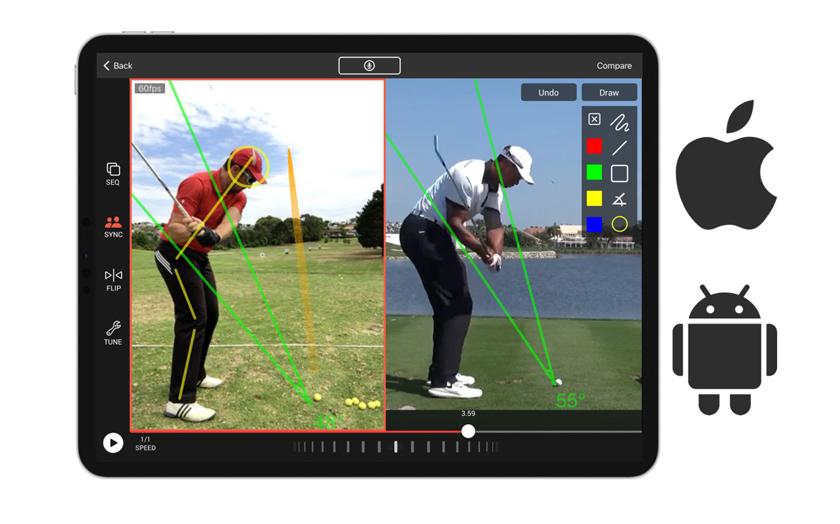
Swing Profile Golf Analyzer for Golf Coaches was named “Best Overall Product” at the PGA Merchandise Show in 2012, and has a number of features that will benefit all golf teachers and coaches. Among them are Auto Capture for analysis and self-training; Ball-Tracker for instant trajectories tracking; Voiceover for recording voice and drawing; automatic video backup across all devices; easy video exchange with students; Student Lockers for organizing student videos, and Coach Directory to list the coaches’ businesses. For more information, please visit www.SwingProfile.com.

EDITORAL – EXPERTISE A COACH MUST POSSESS AND THE ROLES NECESSARY FOR SUCCESS OF A HIGH SCHOOL GOLF TEAM


Many of us played high school golf, and some of us even went on to play at the collegiate level. Even fewer have teed it up as a professional player, but at all levels there is a skill to coaching individuals so they can play their best.

At the high school level, we are often dealing with players new to the game or very inexperienced, so it is imperative that we are able to teach the basic fundamentals of the game without the players getting too bogged down in technical theory. It is also imperative that a high school coach is familiar with the main rules and etiquette of the game and not to be shy in giving out this information. Teaching etiquette, in particular, can be intimidating to new golfers, so a gentle approach is best.

There is nothing more frustrating to a member of a golf team than for a coach to play his or her favorites in the starting lineup instead of the best players. You would think that this doesn’t happen as you would think coaches would want to win above all else, but think again. Playing favorites does happen and it isn’t a good idea.

Above all, a coach needs to be a role model for the team. He or she must be patient but firm, and every team member must feel comfortable in addressing any matter, including non-golf matters, with the coach. Most people will forever remember their high school golf experience, so it’s best the coach makes it a great memory by following these simple but effective principles.
There's a rise in female golfers! 3 golf ladies centered on the graph. One ready to swing a club, a lady in the middle tossing a golf ball, and on the right a lady with hair blowing around and a club on her shoulder. 7.9 m by an increasing arrow.

EDITORAL – GOLF PROGRAMS NEEDED SPECIFICALLY FOR GROWING FEMALE DEMOGRAPHIC

There's a rise in female golfers! 3 golf ladies centered on the graph. One ready to swing a club, a lady in the middle tossing a golf ball, and on the right a lady with hair blowing around and a club on her shoulder. 7.9 m by an increasing arrow.

One of the things that female golfers or would-be golfers have said over the years is that many prefer golf programs specifically with them in mind. Teaching professionals who hold women-only clinics often have quite a few in attendance, as the game can be intimidating, especially for beginners. Learning in an environment geared solely towards them can help ease the intimidation factor that can be present.

As women also become more prominent in the business world, it helps to be able to play a competent game of golf, as high-powered business executives are famous for sealing deals during or after a round of golf. With more women breaking the glass ceiling, they will need the skills to be able to navigate the course. If you are a USGTF professional and you do not have any programs dedicated to women, you are likely missing the boat. You can start with a low-cost program consisting of 3-4 weeks that should be well attended, but the most important aspect is that you are introducing the game to a demographic that is willing and eager to learn.
Rudy Project Glasswears angled to the right some. Astral Sphere eyewear on the left and Turbolence eyewear on the right with the Rudy Project logo on the bottom.

USGTF INDUSTRY PARTNER SPOTLIGHT – RUDY PROJECT

Rudy Project Glasswears angled to the right some. Astral Sphere eyewear on the left and Turbolence eyewear on the right with the Rudy Project logo on the bottom.Rudy Project, a longtime industry partner with the USGTF, has two products that are of interest to USGTF members. The first is the Turbolence, which is an all-sport sunglass that is ideal for those who love to push their limits, whether on the road, trails, or in the water. Equipped with photochromic, polarized or mirrored lenses, it adapts to any light condition, offering optimal vision clarity and total UV and atmospheric protection.

The second is the Astral Sphere, designed to deliver impeccable vision and superior protection. Its spherical lens, available in photochromic or polarized versions, ensures a wide, distortion-free field of view, quickly adapting to changing light conditions and reducing glare. The wraparound design enhances aerodynamics and stability, ensuring a secure fit in the most extreme conditions.

USGTF members receive a personal use discount. To order, please call the National Office at (772) 88-USGTF or (772) 888-7483 to receive the link to the new specialized webpage for USGTF members!
Kosei Imai and Matt Smith posing together with the Augusta Golf Trophy in Kosei's hands and a background of Kosei Imai at the tournament among other golfers.

STUDENT SPOTLIGHT – KOSEI IMAI

Kosei Imai and Matt Smith posing together with the Augusta Golf Trophy in Kosei's hands and a background of Kosei Imai at the tournament among other golfers.By Matt Smith

I want to introduce two current students of mine that are doing great things in 2025. Kosei and Kengo Imai and I have been working together now for two years. They are the hardest working junior golfers I have ever met.

Kengo is 12 years old and competes nationally on the junior golf circuit. He was player of the year on the local U.S. Kids Golf Tour in Columbus, Ohio. He has shot three different rounds of 66 this spring and has taken his game to an elite level. His younger brother Kosei is 9 years old and he also competes on the U.S. Kids Tour locally and nationally. This spring, Kosei made the finals of Drive, Chip and Putt at Augusta National Golf Club. The local NBC television channel did an interview on us right before the Masters. He asked me to be his caddie and we finished 3rd place in his division on Golf Channel! What an exciting day for Ko and myself.

That Thursday, I was also at the Masters and had the pleasure of watching Jack Nicklaus hit the inaugural tee shot. Jack was a legend where I grew up in Columbus. I won his golf scholarship in 1994 and he presented it to me at The Memorial Tournament! What an emotional, awesome week for myself to see my life come full-circle!

I currently work with both of them about twice a month all year round in Ohio. We may switch between my academy indoors and outside playing lessons at Cumberland Trail Golf Club. I am blessed to be able to teach such great young men!