

Columbia University did a recent study where participants were placed in a variety of situations where positive body language techniques were used, but the participants discussed negative and depressing topics. They also created scenarios where participants used negative body language techniques but discussed uplifting topics. Overwhelmingly, students gave favorable impressions of their colleagues based on their positive body language rather than the discussion that took place. The study suggests that people are more often influenced by how they feel about you than by what you’re saying.
Positive body language can have a tremendous impact as a golf coach. Here are some tips to help you develop positive body language:
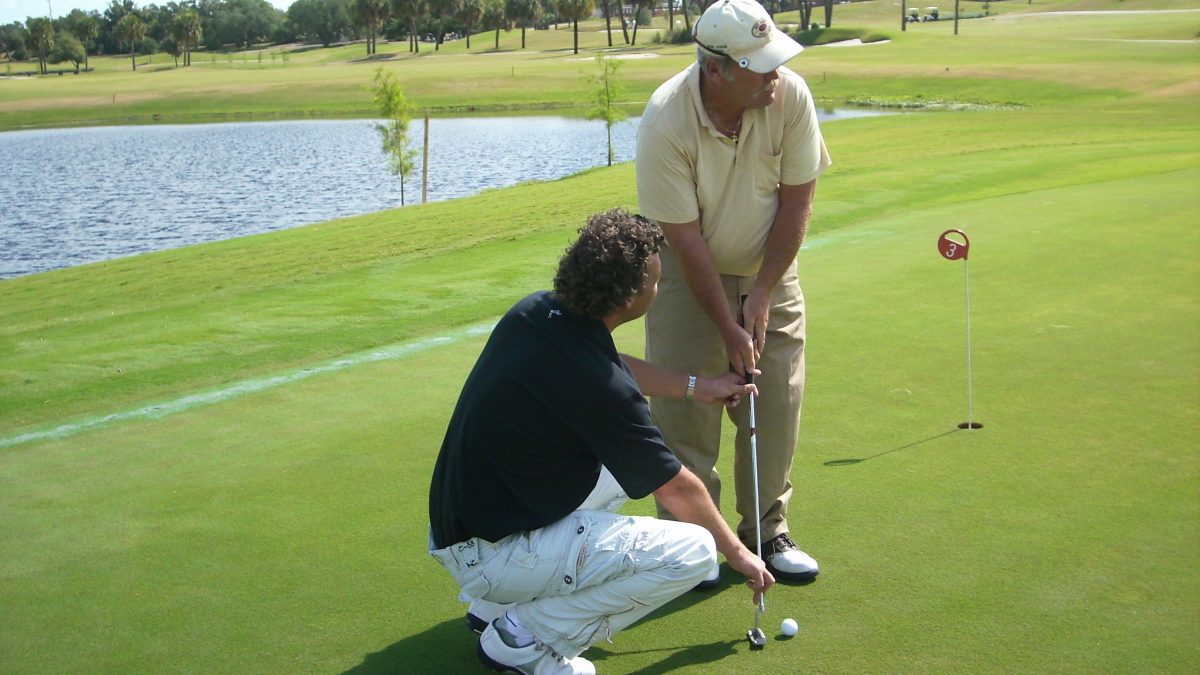
Always look like you’re listening to your client
The key to active listening of your clients is to engage with what your client is saying. Body language is a major component of listening. Leaning forward, nodding, tilting your head, and keeping your feet pointed in the direction of the person speaking are excellent non-verbal ways to show you’re engaged and paying attention. Don’t look at the ground when your client is talking. Active listening also involves repeating back or paraphrasing what your client has said. This is an excellent way to demonstrate that you are genuinely paying attention.
Shake hands before every lesson
Touch is the most powerful non-verbal clue. Physical touch – even a fraction of a second – can create a powerful human bond. It’s in instinctual capability that all humans are born with. It’s for these reasons that a proper handshake is so important. A firm, friendly handshake that conveys a sense of friendship and warmth helps make a person feel closer to us. It is also makes a person far more likely to remember your name and you theirs.
Cultivate a genuine, friendly smile
Smiling not only influences how we feel in a situation, it signals that we are approachable. Additionally, most people have a keen sense of when a person is faking smile. It’s important to convey a sense of happiness when meeting or greeting someone.
Uncross your arms and legs On the flip side, using defensive postures can immediately make someone feel off-put. Defensive body language can impact how your client responds to you. Crossing your arms and legs sends a subtle message to whomever you are speaking with that you’re upset or not enjoying the interaction. Be mindful of it.
Put away the device
Cellphones are easily becoming one of the biggest problems in human interaction. Certainly as a teacher, it’s a daily struggle to keep my students focused on me and not their devices. They may help keep us in contact with each other, but when face to face, there is no greater barrier to a positive interaction than one person (or both!) checking their cellphones. As the coach, you need to set an example by putting it away and keeping it away.
If you play golf and love the game, at some point you will notice a loss in distance. Usually, this is due to age, just getting older, losing flexibility and strength.
Over years, many golfers just don’t realize how much distance they have been losing, because over time, they have been making adjustments to their equipment, changing shafts, finding better club technologies and switching golf balls designs. Ultimately, the loss of distance reaches a point where the golfer gets discouraged and starts to seek answers.
For over 20 years I have been helping people with their golf games, and the number one reason people come to see me is that they want more distance. Here is a plan that can help any player that is looking for more distance:
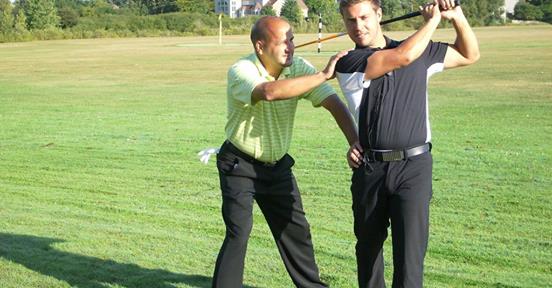
Get your swing analyzed with computer video and fix your flaws. Sometimes, players just have bad technique and are giving away distance. A lot of recreational players that don’t have good golf fundamentals will notice a larger drop in their distance as they get older, because they have learned to use non-fundamental power sources to create speed. Look at older players like Tom Watson, who still generates lots of club speed even at age 68 and is still competitive on the PGA Tour. Watson obviously has a good golf swing, but he swings with tempo, uses his legs and hips as well as his arms to create speed. Most recreational players never learned to use their hips and legs properly in the golf swing, and this flaw becomes very noticeable with age.
TIP: Learn to use your hips and legs properly in your golf swing to create more speed and distance.
Get your club speed, ball speed and launch data analyzed on a launch monitor to make sure your clubs are correct for your speed. One of the best things you can do as a golfer is to get your club speed, ball speed and launch data analyzed at least once a year if you play golf on a regular basis. Ultimately, it all comes down to physics, and if you don’t have the correct equipment, you are at a huge disadvantage as it relates to distance. Based on how fast you swing, the ball speed you create and how you launch the ball, you need equipment that matches your abilities to get more distance.
TIP: Check your club speed, ball speed and launch data at least once a year if you play golf on a regular basis.
Start a golf-specific fitness and stretching program to help your body swing faster. Your body is an incredible thing. You will be surprised how just a little effort in working on your body will have amazing results in your golf swing and the ability to generate more distance. Many people don’t understand that your legs have a critical role in the golf swing, much like jumping. When you jump, you use the big muscles of your legs, your core and parts of your body that need to be strong and flexible. I have a great little drill that I offer to clients that anyone can do. Just sit in a sturdy chair, cross your arms across your chest. Using your core and your legs, just stand up, sit back down and repeat 8-10 times. Try to sit down slowly to keep your legs engaged. This exercise really helps use your legs and core, which will help your golf swing.
TIP: Start a golf fitness and stretching program. If you have medical conditions, please speak with your doctor first before starting any fitness program.
If you are one of the millions of golfers that are struggling with losing distance, make sure to get your swing analyzed, have your equipment checked and start a simple golf fitness program. You will be on your way to more distance in no time.
Arlen Bento Jr. is an award-winning golf coach, “Top 100” world-recognized golf instructor and club fitting expert living in Jensen Beach, Florida. He operates his own indoor golf academy in Stuart and is the co-host of Golf Talk Radio on WSTU 1450 AM. You can listen to his radio show on Wednesday evenings from 6-7 pm, or watch online at www.golftalkflorida.com. Arlen can be reached for instruction at (772) 485 8030, by email at arlenbentojr@gmail.com, or on his website www.arlenbentojrgolflessons.com.

We all have been in the situation of preparing for an important round of golf. Many times, I have seen good golfers poorly prepare for the opening tee shot of the day. Getting off to a good start can set the tone for the whole day. Below are some tips to help a golfer get the day started off on a positive note and a successful round of golf:
Before You Tee Off
How to Prepare Before the Round: Try to make the time before your tee-off stress free. Feel as if you do everything in slow motion without rushing or stress before an important round of golf.
The great player Cary Middlecoff was known for a long, slow swing. His play was deliberate and he rarely cracked under pressure. He had a set routine like all great players and would never rush or vary his routine before a round. His routine included driving extra slow to the golf course and listening to relaxing music.
Have a Set Warm Up Routine: Fitness research has shown that proper warm-up technique does not start with stretching.
The correct technique is to warm up slowly before stretching. This could include a slow jog, but more realistically for the golfer, simply striking a few short shots with an easy swing. The best way is to make short 20- to 30-yard pitch shots, then slowly working into ¾ pitch shots. After a few minutes, begin stretching out the muscles, focusing on the major muscle groups for golf.
Remember, never “bounce” when stretching, but hold the position for a few seconds and return to the relaxed position.
Prepare for Your Opening Tee Shot: After going through your warm-up routine, mentally prepare for your opening tee shot.
The last shot on the practice range when warming up should be the same shot as your opening tee shot. For example, if you plan on hitting a driver on the first hole, hit a good solid drive for your last practice shot. This way, there is a positive image in your mind.
Practice Short Putts Before You Tee Off: Before you tee off, practice putts of one yard or less. Be prepared to hole out over 15 short putts during the round! Holing shorts putts can make or break your day.
The Tee Box
Choose the Correct side of the Tee Box: Don’t just plop the tee and ball anywhere between the markers. Remember that you have the right to tee the ball up anywhere between the markers and up to two club lengths behind the markers.
The smart player uses this to his advantage. If a right-hander tends to fade the ball, he hits from the right side of the tee box; if he tends to hook the ball, he hits from the left side of the tee box. This can also help if there is trouble on one side of the fairway. Always tee the ball on the side of the tee box that has the trouble and shoot away from the danger.
Tee the Ball High for a Hook and Low for a Fade: A ball teed high will tend to promote a sweeping swing, making it easier to draw the ball. Teeing the ball low will promote a steeper swing, promoting a fade.
Use a Tee on Par Threes: When playing a par-3, too often I see a player simply drop the ball between the markers. Use a tee to your advantage by creating a perfect lie.
A ball teed low just slightly above the ground level will mimic a perfect lie in the fairway. This will increase the chances of a solid strike.
For Your Target, Have Tunnel Vision: As you prepare to hit a shot, choose a target and try to hit the ball only at that target.
Many players immediately look for all the danger and spend more thought on what can go wrong rather than positive images. A good player has “tunnel vision” and simply aims at a single small target. The subconscious mind does not understand negative words; therefore, when you tell yourself, “Don’t go O.B.,” you are just telling your subconscious mind to “go O.B.,” therefore reinforcing negative images!
Plan Your Strategy for Each Hole: Use the correct club to tee off. It is not necessary to hit driver on every hole. If you watch the pros, they hit driver as little as 3-4 times a round. A good strategy is to figure out what distance off the tee will give you a comfortable approach shot to the green. For example, a 345-yard par-4 may require as little as only 200 yards off the tee to leave a “comfortable” wedge shot. Often this strategy applies to par-5s, as well.
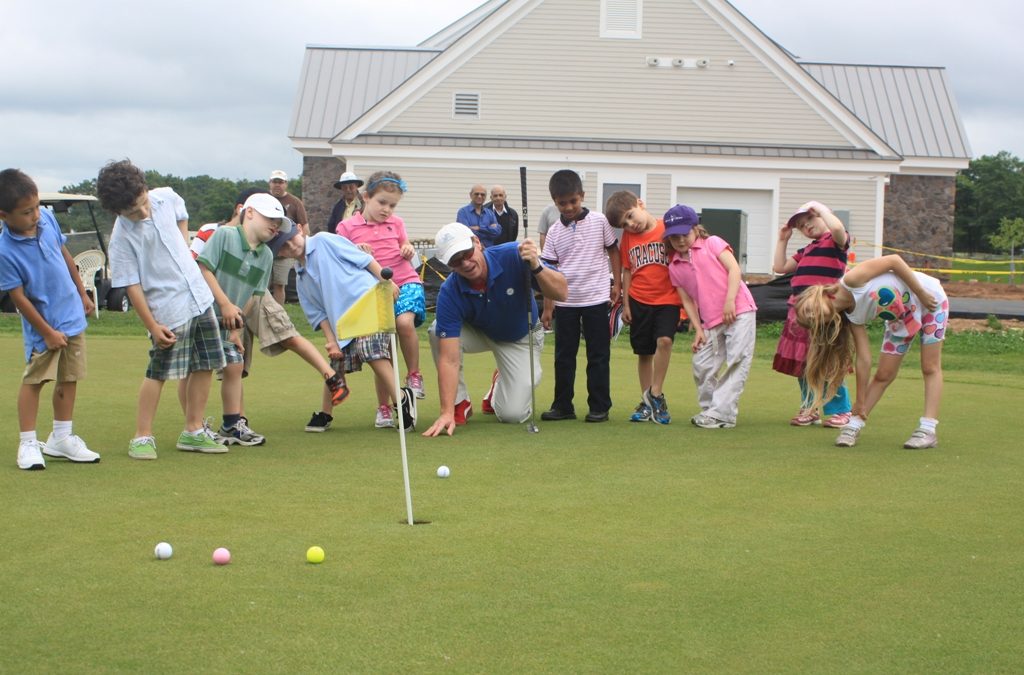
It’s that time of the year again when the school year has finished up and parents need to find something for their kids to do during the long summer days. As a golf coach, my first instinct is to brainstorm all the things necessary to organize a successful summer camp; all the nuts and bolts and logistics that go into keeping 30 grade school-age children entertained. Instead, I’d like to put on a different hat for a minute: that of the parent of an energetic six-year-old boy. From this perspective, what would be the important things to look for in a successful golf camp?
Building Friendships One of the groomsmen in my wedding was a friend I made at a summer camp when I was eight years old. You never know when you might meet a lifelong friend, and a good summer camp can provide the opportunity to do so. Golf is, by its nature, a solitary sport. As a parent, I would want to ensure that there is plenty of socialization time built into the daily schedule.
Safety and Etiquette Although he’s six years sold, I still have not taken my son to a course for a full round of golf. He’s very energetic and would likely spend most of his time wanting to run on the greens, playing in the sand traps and making lots of noise. Most of this is basic six-year-old stuff, but on the golf course it’s generally frowned upon and can even be dangerous if he’s interfering with other golfers. I’ve wanted to avoid the headache and frustration of teaching him the etiquette of the sport. They will likely be much easier for him to learn in a camp setting surrounded by kids his own age who behave the same way.
MotoGP bukan sekadar ajang balap motor paling bergengsi di dunia — bagi jutaan penggemar yang juga terlibat dalam aktivitas taruhan olahraga, setiap seri balapan menghadirkan dinamika peluang yang kompleks dan menarik untuk dipahami. Memahami cara membaca odds MotoGP adalah keterampilan dasar yang harus dikuasai sebelum seseorang mulai memasang taruhan secara serius. Odds bukan hanya angka acak yang ditampilkan oleh bandar — di balik setiap angka tersebut terdapat kalkulasi matematis, analisis performa pembalap, kondisi sirkuit, hingga faktor cuaca dan ban. Artikel ini akan membahas secara mendalam bagaimana sistem odds MotoGP bekerja, format-format yang umum digunakan, cara menginterpretasikan nilai peluang tersebut, dan bagaimana menggunakannya untuk membuat keputusan taruhan yang lebih terinformasi.
Odds, atau yang dalam bahasa Indonesia sering disebut sebagai “peluang” atau “nilai taruhan”, adalah representasi numerik dari probabilitas suatu kejadian terjadi dalam sebuah kompetisi. Dalam konteks MotoGP, odds mencerminkan seberapa besar kemungkinan seorang pembalap memenangkan balapan, meraih podium, atau bahkan menyelesaikan balapan di posisi tertentu. Semakin kecil angka odds yang diberikan kepada seorang pembalap, semakin besar kemungkinan pembalap tersebut dianggap akan menang oleh bandar taruhan.
Secara historis, sistem odds dalam olahraga balap motor mulai terstandarisasi pada era 1990-an ketika pasar taruhan olahraga mulai berkembang pesat di Eropa, khususnya di Inggris dan Italia — dua negara dengan basis penggemar MotoGP yang sangat besar. Pada masa itu, odds masih didominasi oleh format fraksional (fractional odds) yang populer di kalangan bandar Inggris. Seiring waktu, format desimal (decimal odds) yang lebih mudah dipahami mulai mendominasi pasar Eropa daratan dan Asia, termasuk Indonesia.
Penting untuk dipahami bahwa odds bukan semata-mata mencerminkan probabilitas murni. Di dalamnya sudah termasuk margin keuntungan bandar yang dikenal sebagai “vig” atau “juice” — biasanya berkisar antara 5 hingga 10 persen dari total pool taruhan. Artinya, jika Anda menjumlahkan probabilitas implisit dari semua pembalap dalam satu balapan, totalnya akan melebihi 100 persen. Selisih inilah yang menjadi keuntungan bandar, terlepas dari siapa yang menang.
Sebagai contoh konkret, pada MotoGP musim 2023, Pecco Bagnaia dari tim Ducati Lenovo sering tampil dengan odds desimal sekitar 2,50 hingga 3,00 di beberapa seri awal musim. Artinya, jika Anda memasang taruhan sebesar 100.000 rupiah dan Bagnaia menang, Anda akan mendapatkan total 250.000 hingga 300.000 rupiah — termasuk modal awal Anda. Keuntungan bersih yang diperoleh adalah 150.000 hingga 200.000 rupiah. Sementara itu, pembalap dengan peluang lebih kecil seperti pembalap tim satelit mungkin memiliki odds 15,00 atau bahkan lebih tinggi, yang berarti potensi keuntungan jauh lebih besar tetapi probabilitas kemenangan yang jauh lebih rendah.
Ada tiga format utama odds yang digunakan secara global dalam taruhan MotoGP, dan memahami perbedaan ketiganya adalah hal mendasar yang harus dikuasai oleh siapa pun yang ingin terlibat dalam aktivitas taruhan balap motor secara serius.
Format pertama adalah odds desimal (decimal odds), yang paling umum digunakan di Indonesia dan sebagian besar Asia serta Eropa. Format ini ditulis sebagai angka desimal seperti 2,50 atau 4,75. Cara menghitung kemenangan dengan format ini sangat sederhana: kalikan jumlah taruhan dengan angka odds, dan hasil perkalian tersebut adalah total yang akan Anda terima jika menang, sudah termasuk modal. Misalnya, taruhan 200.000 rupiah pada odds 4,75 akan menghasilkan 950.000 rupiah jika berhasil — dengan keuntungan bersih 750.000 rupiah.
Format kedua adalah odds fraksional (fractional odds), yang lebih umum di pasar Inggris. Odds ini ditulis dalam bentuk pecahan seperti 3/1, 5/2, atau 7/4. Angka di sebelah kiri menunjukkan keuntungan yang akan diperoleh jika Anda memasang jumlah yang ditunjukkan angka di sebelah kanan. Jadi, odds 5/2 berarti untuk setiap 2 unit yang Anda pertaruhkan, Anda akan mendapatkan keuntungan 5 unit jika menang. Untuk mengkonversi odds fraksional ke desimal, tambahkan 1 pada hasil pembagian: (5÷2)+1 = 3,50 dalam format desimal.
Format ketiga adalah odds Amerika (moneyline odds), yang menggunakan angka positif dan negatif. Angka negatif seperti -150 menunjukkan berapa banyak yang harus Anda pertaruhkan untuk mendapatkan keuntungan 100 unit. Angka positif seperti +250 menunjukkan berapa banyak keuntungan yang akan Anda dapatkan jika memasang 100 unit. Format ini jarang digunakan di pasar Asia untuk MotoGP, tetapi penting untuk diketahui karena beberapa platform taruhan internasional masih menggunakannya.
Selain format-format dasar tersebut, dalam taruhan MotoGP juga dikenal beberapa jenis pasar taruhan yang masing-masing memiliki struktur odds tersendiri. Pasar “Race Winner” adalah yang paling umum, di mana Anda bertaruh pada siapa yang akan memenangkan balapan. Pasar “Podium Finish” memiliki odds yang lebih rendah karena peluang lebih besar — pembalap hanya perlu finis di tiga besar. Ada juga pasar “Head-to-Head” di mana dua pembalap diperbandingkan langsung, dan Anda hanya perlu memilih siapa yang finis lebih tinggi dari keduanya. Pasar ini sangat populer karena mengurangi kompleksitas analisis — dari 22 pembalap menjadi hanya dua pilihan.
Referensi dari Panduantaruhan menunjukkan bahwa pemahaman mendalam tentang berbagai format odds ini sangat berpengaruh terhadap kualitas keputusan taruhan seseorang, terutama ketika membandingkan nilai antar platform yang berbeda-beda.
Membaca angka odds saja tidak cukup — yang membedakan petaruh pemula dengan yang lebih berpengalaman adalah kemampuan untuk menginterpretasikan odds dalam konteks yang lebih luas. Odds MotoGP dipengaruhi oleh banyak faktor yang berubah secara dinamis sepanjang musim bahkan dalam satu akhir pekan balapan.
Salah satu faktor paling signifikan adalah performa di sesi kualifikasi. Dalam format balapan MotoGP modern — yang sejak 2023 telah dimodifikasi dengan penambahan Sprint Race setiap Sabtu — posisi grid start memiliki pengaruh besar terhadap peluang kemenangan. Data historis menunjukkan bahwa pembalap yang start dari posisi pole position memiliki tingkat konversi kemenangan sekitar 30-35 persen di era modern MotoGP. Ini berarti odds yang diberikan kepada pole sitter seharusnya tidak jauh dari kisaran 2,85 hingga 3,33 jika odds tersebut benar-benar mencerminkan probabilitas murni. Jika bandar memberikan odds yang jauh berbeda dari rentang ini, ada kemungkinan terdapat nilai (value) yang bisa dimanfaatkan.
Faktor kedua yang krusial adalah karakteristik sirkuit. MotoGP berlomba di 20 sirkuit berbeda sepanjang musim, dan setiap sirkuit memiliki karakteristik unik yang menguntungkan atau merugikan pembalap tertentu. Sirkuit Mugello di Italia, misalnya, adalah sirkuit dengan kecepatan tinggi yang sangat menguntungkan motor Ducati karena keunggulan top speed-nya. Sementara itu, sirkuit Assen di Belanda dengan tikungan-tikungan teknis dan kecepatan menengah cenderung menguntungkan pembalap dengan gaya riding halus dan presisi tinggi. Pemahaman tentang karakteristik sirkuit ini memungkinkan Anda untuk mengevaluasi apakah odds yang diberikan bandar sudah memperhitungkan faktor ini dengan tepat atau belum.
Faktor ketiga adalah kondisi ban dan cuaca. Sejak era Michelin kembali menjadi pemasok ban tunggal MotoGP pada 2016, dinamika pemilihan ban menjadi variabel penting. Ban keras, medium, dan lunak memiliki karakteristik degradasi yang berbeda, dan pilihan kompon ban yang tepat bisa sangat menentukan hasil balapan. Jika prakiraan cuaca menunjukkan kemungkinan hujan, odds bisa berubah drastis — pembalap yang dikenal handal dalam kondisi basah seperti Marc Marquez pada era dominasinya di 2013-2019 biasanya akan mengalami penurunan odds yang signifikan ketika ada kemungkinan balapan di kondisi basah.
Faktor keempat yang sering diabaikan oleh pemula adalah pergerakan odds itu sendiri. Odds tidak statis — mereka berubah seiring waktu berdasarkan volume taruhan yang masuk dan informasi baru yang tersedia. Jika odds seorang pembalap tiba-tiba turun tajam dalam beberapa jam sebelum balapan, ini bisa mengindikasikan bahwa banyak uang “pintar” (smart money) dari petaruh berpengalaman sedang masuk pada pembalap tersebut. Sebaliknya, odds yang naik drastis bisa mengindikasikan adanya informasi negatif — misalnya pembalap mengalami cedera kecil dalam sesi latihan atau motornya mengalami masalah teknis yang belum dipublikasikan secara resmi.
Dalam konteks musim 2022, ketika Fabio Quartararo dari tim Monster Energy Yamaha mempertahankan gelar juara dunianya, banyak analis taruhan mencatat bahwa odds Quartararo di beberapa seri pertama musim itu terlalu rendah dibandingkan dengan realita performa motor Yamaha yang sudah mulai tertinggal dari Ducati dalam hal kecepatan lurus. Petaruh yang mampu membaca konteks ini dan memilih untuk tidak mendukung Quartararo di seri-seri tertentu, atau bahkan bertaruh melawannya, berhasil menemukan nilai yang signifikan.
Setelah memahami format dan konteks odds, langkah berikutnya adalah mengembangkan pendekatan sistematis dalam menggunakan informasi odds tersebut untuk membuat keputusan taruhan. Ada beberapa metodologi yang digunakan oleh petaruh olahraga profesional yang bisa diadaptasi untuk MotoGP.
Konsep pertama yang perlu dipahami adalah nilai ekspektasi (expected value atau EV). Sebuah taruhan memiliki nilai positif (positive EV) ketika probabilitas kemenangan yang Anda estimasikan lebih tinggi dari probabilitas implisit yang tercermin dalam odds. Probabilitas implisit dihitung dengan formula sederhana: 1 dibagi dengan odds desimal, kemudian dikalikan 100 untuk mendapatkan persentase. Misalnya, odds 4,00 memiliki probabilitas implisit 25 persen. Jika berdasarkan analisis Anda, pembalap tersebut sebenarnya memiliki peluang menang 35 persen, maka taruhan ini memiliki positive EV dan secara teoritis layak untuk diambil dalam jangka panjang.
Konsep kedua adalah line shopping atau perbandingan odds antar bandar. Berbeda dengan beberapa olahraga lain, odds MotoGP bisa bervariasi cukup signifikan antar platform taruhan. Satu bandar mungkin memberikan odds 3,50 untuk kemenangan pembalap tertentu, sementara bandar lain memberikan 4,00 untuk pembalap yang sama. Perbedaan ini, meskipun tampak kecil, memiliki dampak signifikan pada profitabilitas jangka panjang. Petaruh yang secara konsisten memilih odds terbaik yang tersedia akan memiliki keunggulan struktural dibandingkan mereka yang hanya menggunakan satu platform.
Konsep ketiga adalah manajemen bankroll yang disiplin. Dalam taruhan MotoGP, musim berlangsung selama 20 seri atau lebih, dan fluktuasi hasil dalam jangka pendek adalah hal yang normal bahkan bagi petaruh dengan analisis yang akurat. Pendekatan yang umum digunakan adalah sistem taruhan flat — yaitu memasang jumlah yang sama (biasanya 1-5 persen dari total bankroll) pada setiap taruhan, terlepas dari seberapa yakin Anda dengan analisis tersebut. Pendekatan ini melindungi bankroll dari kerugian besar akibat satu atau beberapa taruhan yang tidak berhasil.
Konsep keempat yang sering dibahas dalam komunitas taruhan olahraga adalah pentingnya spesialisasi. MotoGP memiliki 20 seri balapan di berbagai benua dengan kondisi yang sangat berbeda-beda. Petaruh yang memilih untuk fokus pada beberapa seri atau sirkuit tertentu — misalnya hanya seri-seri di Eropa atau hanya sirkuit-sirkuit dengan karakteristik teknis tertentu — cenderung memiliki pemahaman yang lebih mendalam dibandingkan mereka yang mencoba menganalisis semua seri dengan kedalaman yang sama. Spesialisasi memungkinkan akumulasi pengetahuan kontekstual yang jauh lebih kaya.
Penting juga untuk memahami bahwa pasar taruhan MotoGP berbeda secara fundamental dari olahraga tim seperti sepak bola. Dalam MotoGP, variabilitas hasil jauh lebih tinggi karena banyak faktor teknis yang sulit diprediksi — kerusakan mekanis, insiden di trek, degradasi ban yang tidak terduga, dan sebagainya. Data dari musim 2019 hingga 2023 menunjukkan bahwa pole sitter hanya berhasil menang dalam sekitar 30-35 persen kasus, dan pembalap favorit (odds terendah) menang dalam sekitar 40-45 persen balapan. Artinya, dalam lebih dari separuh balapan MotoGP, kejutan terjadi dan pembalap non-favorit yang menang. Ini menciptakan peluang yang menarik bagi petaruh yang mampu mengidentifikasi kandidat kejutan dengan odds yang menarik.
Aspek lain yang perlu diperhatikan adalah pasar taruhan selama musim (outright atau championship odds). Berbeda dengan taruhan per balapan, odds juara musim dipengaruhi oleh dinamika akumulasi poin sepanjang musim. Pada awal musim 2023, Jorge Martin dari tim Pramac Racing memiliki odds juara musim yang relatif tinggi — sekitar 8,00 hingga 10,00 — karena statusnya sebagai pembalap tim satelit. Namun seiring musim berjalan dan Martin terus mengumpulkan poin secara konsisten, odds-nya turun drastis. Petaruh yang masuk di awal musim dengan odds tinggi berhasil mendapatkan nilai yang luar biasa, meskipun akhirnya Martin gagal meraih gelar pada musim itu.
Dengan memahami semua dimensi ini — format odds, konteks analitis, dan strategi penggunaan — seseorang akan jauh lebih siap untuk terlibat dalam taruhan MotoGP secara terinformasi dan bertanggung jawab. Membaca odds bukan tentang mencari jaminan kemenangan, karena dalam olahraga apa pun, ketidakpastian selalu ada. Yang bisa dilakukan adalah meningkatkan kualitas keputusan secara konsisten sehingga dalam jangka panjang, analisis yang lebih baik menghasilkan hasil yang lebih baik pula. MotoGP, dengan kompleksitasnya yang tinggi dan dinamika yang terus berubah dari satu seri ke seri berikutnya, adalah salah satu olahraga yang paling menantang sekaligus paling menarik untuk dianalisis dari perspektif taruhan — dan pemahaman mendalam tentang cara membaca odds adalah fondasi dari semua itu.
It Had Better Be Fun The last thing I want is for my son to associate golf with being bored in the sun. Last summer, he attended a variety of summer camps, including gymnastics and skateboarding. I asked him for his thoughts on what makes a good summer camp, and which were his favorites. It turns out he liked gymnastics camp the best, and when I asked why, he said, “The coaches were really awesome!” As it turns out, the things he wants most in a golf camp are caring coaches who help him have a good time.




For those of us in the golf business, the summer season can be a challenge. In Florida, the summer months are so unbearably hot that many people can’t imagine being outside at all, much less playing a round of golf for four hours. As a golf teacher, how do I make the most of one of the slower times of the year? Even if you live up north where the summer might be the only time to play and practice, these tips could still make a difference in growing your clientele:
Capitalize on the major tournaments
If you check out Google search trends for “golf” on a yearly basis, you can see how interest in the sport spikes right around the beginning of April, which just happens to coincide with the Masters tournament. The dates of last year’s U.S. Open, British Open and PGA Championship also reveal similar spikes in attraction. As a golf teacher, it would be most prudent to time any advertising or special discounts with the weekends of these tournaments as further incentive to get those new potential clients out on the course or the range for a lesson or two.
Organize children’s summer camps
We’ve all heard in recent years about how golf participation is down from the highs of the early 2000s. And it’s true, except for one demographic: youth participation is at an all-time high. As the summer approaches, working parents will be looking for ways to occupy Little Johnny or Little Sally for the two months school is not in session. Offering half-day or full-day summer camp programs give you an opportunity to make inroads with that ever-growing golf demographic.
Give demos to schools and local businesses
Speaking of schools, offering free demonstrations toward the end of the school year can be a great way to make sure your planned summer camp program is full of participants. Check your local school district calendar to find out when high-stakes testing is completed, and schools may be more willing to allow you on campus to distribute materials or ask for sign-ups. Offering to provide breakfast for a school faculty or local businesses workers can also be a great way to make connections, which will result in more clients.
Tap into the tourism of your area
Changes in the weather mean changes in who travels to your area. To use Florida as an example once again, the summer months tend to see an overall slowing of tourism, but also a change in the types of tourists. Elderly tourists, for example, tend to head back up north. But there’s a corresponding increase in Europeans due to the reduced hotel and resort rates during the summer months. Any advertising specials you offer on golf lessons should take these changes into account.
The summer might be a slow time of year for golf, but the rules of a good business still apply. Continue marketing yourself and working to get new clients, and the summer won’t have to be the doldrums of the years.