
As we reach the full start of the summer golf season, I wanted to write about how important it is to understand that lowering your score in golf is sometimes a lot more mental the physical.
I work with a lot of junior players over the summer months preparing players for the high school golf season in Florida and summer junior golf events. For the advanced junior players that have good swings and control of the golf ball, the biggest hurdle for lowering scores is the mental side of the game. I have always coached my players with the idea that every miss in golf has a reason. I have devised a simple way for my players to identify the reason the miss happened, based on assigning a “miss idea,” to show them how and why they miss on the course.
The first miss that we identify is a physical miss. This is a miss caused by a bad swing or a physical error. The second miss that we identify is an intellectual miss. This is a miss caused by a player trying to hit a shot that just was not possible. An example of this would be trying to hit a soft flop shot off or hard pan or firm uncovered ground, or flying through a gap in the trees off of pebbles or unstable ground.
The third miss that we identify is the mental miss. This is a miss caused by a player who did not commit to a shot, and the player is making a swing with indecision or a bad idea in their head. This could be as simple as letting a noise or sound distract them as they swing, or letting the thought of a bad shot from the previous hole cause a lack of focus and a swing error.
I ask all my players at the end of their rounds to count how many times they missed in their round and to identify the miss. In almost all cases, the miss is caused my mental error. Because the mental error is so prominent, we are always working at improving our technique to eliminate mental errors. One of the best ways to eliminate mental errors is to really focus on the mental checklist of a shot before a player makes a swing. I always tell my players that every shot you will ever hit has a value. That value is the yardage plus the calculations of the particulars like lie, wind, and miss zone. By focusing on the value of the shot, then applying a club selection and swing thought to match the value of the shot, players can all but eliminate mental errors on their score cards, thus lowering their scores.
Master Teaching Professional Arlen Bento Jr. is a golf coach, golf sales business owner, golf product developer, and golf writer living in Jensen Beach, Florida. He is a former professional tournament player and is a national award-winning head golf professional at the PGA Country Club at PGA Village in Port St. Lucie, FL. He can be reached via Facebook at www.facebook.com/arlenbentojr or on his blog http://arlenbentojr.blogspot.com or on his business website, www.abjgolfsales.com.


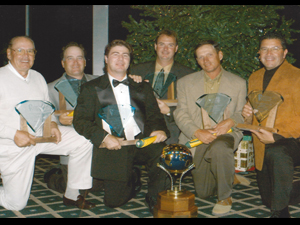
This photo was taken at Siem Reap Booyoung Country Club by USGTF member Leo Perlmutter while travelling in Cambodia.