



 By Thomas T Wartelle WGTF Master Golf Teaching Professional Washington, Louisiana
The golf swing is a series of movements that takes a PGA Tour professional approximately 0.75 seconds for the backswing and 0.25 seconds
for the downswing, for a grand total of 1 second! The interesting thing is the 3:1 ratio of backswing to downswing. Studies have shown that the great players all had the similar 3:1 ratio. This certainly proves that timing and sequencing of the golf swing plays a big factor in long-term success. Interestingly, it has been found that most amateur golfers’ backswings are actually too slow and out of sequence to be consistently successful at impact.
Now, from a biomechanics standpoint, this is often caused by a backswing sequence that is just not as efficient as a tour player’s. A major
flaw often overlooked in amateur golfers is how the centers of their torso and pelvis move during the swing. The tour pro moves his centers slightly away from the target early in the backswing, like all athletic motions of throwing or swinging. This “early loading” occurs before the club shaft is parallel to the ground. It is typically only less than 1 inch. By the time a tour pro reaches the top of the backswing, their torso and pelvis re-center to their original position at address. One of the most interesting things is early in the downswing, their centers have moved ahead of the ball. This produces an optimal position to deliver an efficient and powerful impact.
High-handicap golfers tend to be much less efficient in their backswings. They do not do these sequences properly, or they do them too
late. Often, they continue to try to load away from the target late into the backswing. They feel like moving away from the target and trying
to maximize their turn creates more power. In reality, it just makes them later in getting their torso and pelvis centers into the proper downswing sequence. By trying to load too far and too late on the backswing, they end up working hard to try to “save” the shot. There is just not enough time on the downswing for them to deliver the club to a successful impact position.
Now, how do we relate this to instruction? Many instructors are using really great modern technology to pinpoint the flaws of a golf swing. Here is where instructors get it wrong: With all of their technology, pressure plates, launch monitors and metrics, they fail to convey the proper message to the student. Remember, the golf swing happens in a mere second from the move away until impact. Think about it: As a kid, did you analyze where your torso and pelvis centers were located when you tried to hit a baseball? Did you think about your weight distribution when you threw a ball? Did you think about your center of gravity when you started to jump?
Some people have more athletic awareness than others; however, most people have an innate ability to achieve some level of a golf swing goal. Granted, there can be some limitations, but mostly these innate abilities need to be activated or woken up. There are many thoughts and drills that one can use to achieve better swing sequencing. As an instructor, I try to use more active drills and feelings to achieve swing goals.
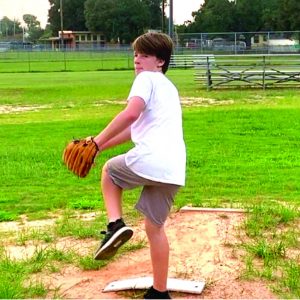
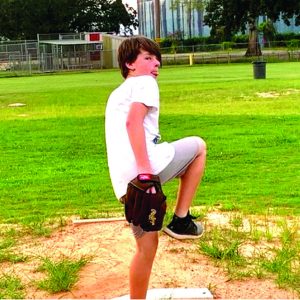
For example and thinking out of the box, there is my son, who is an up-and-coming junior golfer. He was not quite getting his swing sequencing where he wanted to be. I simply brought out a baseball and glove. As we began to throw, I encouraged him to throw harder and harder. The next time he hit balls, he instantly felt all of the swing sequencing described earlier. This positive result happened without rattling off metrics and going into a long biophysical explanation to the student. After all, golf is a results-oriented endeavor, and most students are looking for results.
As an instructor, I encourage the use of technology. But more importantly, learn how to apply the technology to help you convey the
message through active teaching. Technology is great, but not always really needed. A truly trained eye and analysis of the ball strike can discern most impact flaws. Technology only quantifies exact numbers. Students are generally not interested in the numbers and biomechanics. They are interested in hitting solid shots and playing better.
By Thomas T Wartelle WGTF Master Golf Teaching Professional Washington, Louisiana
The golf swing is a series of movements that takes a PGA Tour professional approximately 0.75 seconds for the backswing and 0.25 seconds
for the downswing, for a grand total of 1 second! The interesting thing is the 3:1 ratio of backswing to downswing. Studies have shown that the great players all had the similar 3:1 ratio. This certainly proves that timing and sequencing of the golf swing plays a big factor in long-term success. Interestingly, it has been found that most amateur golfers’ backswings are actually too slow and out of sequence to be consistently successful at impact.
Now, from a biomechanics standpoint, this is often caused by a backswing sequence that is just not as efficient as a tour player’s. A major
flaw often overlooked in amateur golfers is how the centers of their torso and pelvis move during the swing. The tour pro moves his centers slightly away from the target early in the backswing, like all athletic motions of throwing or swinging. This “early loading” occurs before the club shaft is parallel to the ground. It is typically only less than 1 inch. By the time a tour pro reaches the top of the backswing, their torso and pelvis re-center to their original position at address. One of the most interesting things is early in the downswing, their centers have moved ahead of the ball. This produces an optimal position to deliver an efficient and powerful impact.
High-handicap golfers tend to be much less efficient in their backswings. They do not do these sequences properly, or they do them too
late. Often, they continue to try to load away from the target late into the backswing. They feel like moving away from the target and trying
to maximize their turn creates more power. In reality, it just makes them later in getting their torso and pelvis centers into the proper downswing sequence. By trying to load too far and too late on the backswing, they end up working hard to try to “save” the shot. There is just not enough time on the downswing for them to deliver the club to a successful impact position.
Now, how do we relate this to instruction? Many instructors are using really great modern technology to pinpoint the flaws of a golf swing. Here is where instructors get it wrong: With all of their technology, pressure plates, launch monitors and metrics, they fail to convey the proper message to the student. Remember, the golf swing happens in a mere second from the move away until impact. Think about it: As a kid, did you analyze where your torso and pelvis centers were located when you tried to hit a baseball? Did you think about your weight distribution when you threw a ball? Did you think about your center of gravity when you started to jump?
Some people have more athletic awareness than others; however, most people have an innate ability to achieve some level of a golf swing goal. Granted, there can be some limitations, but mostly these innate abilities need to be activated or woken up. There are many thoughts and drills that one can use to achieve better swing sequencing. As an instructor, I try to use more active drills and feelings to achieve swing goals.
For example and thinking out of the box, there is my son, who is an up-and-coming junior golfer. He was not quite getting his swing sequencing where he wanted to be. I simply brought out a baseball and glove. As we began to throw, I encouraged him to throw harder and harder. The next time he hit balls, he instantly felt all of the swing sequencing described earlier. This positive result happened without rattling off metrics and going into a long biophysical explanation to the student. After all, golf is a results-oriented endeavor, and most students are looking for results.
As an instructor, I encourage the use of technology. But more importantly, learn how to apply the technology to help you convey the
message through active teaching. Technology is great, but not always really needed. A truly trained eye and analysis of the ball strike can discern most impact flaws. Technology only quantifies exact numbers. Students are generally not interested in the numbers and biomechanics. They are interested in hitting solid shots and playing better.
 Learn active drills and exercises that can help each student of yours reach their maximum potential. Keep informed and keep learning new
techniques. However, pay homage to the past, as nothing is really new in athletic motion. We just learn different ways to convey the message. I recently learned a new thing too: I need a better catcher’s mitt and protection from my son’s lefthanded fastball!
Learn active drills and exercises that can help each student of yours reach their maximum potential. Keep informed and keep learning new
techniques. However, pay homage to the past, as nothing is really new in athletic motion. We just learn different ways to convey the message. I recently learned a new thing too: I need a better catcher’s mitt and protection from my son’s lefthanded fastball!
 By Mark Harman
USGTF Course Director
Ridgeland, South Carolina
My teaching career began in early 1989 with The Florida Golf School, before there was a USGTF. In order to get my feet wet, I was assigned
to teach beginners. I was told to teach them the basics, and I knew enough about them to get by. Although I was about a 2-handicapper at this time, I soon learned there is a world of difference between having knowledge of the basics and how to impart them.
Fortunately, I had a number of very good mentors who helped me along the way. In particular (and these names might be familiar to some of you old-timers), Mitch Crum, Chris Kelly, Jack Feola, Doug Freeman and Judy Garvey helped guide me, patiently answering my seemingly endless questions. They showed me drills to fix certain problems and certain swing concepts.
Also instrumental was Dr. Gregg Steinberg, who was attending Florida State University at the time earning his Masters degree. Gregg and I met at Seminole Golf Course in Tallahassee, where I lived at the time. He really helped me understand the concept that the lower body starting the downswing was instrumental in how a golfer returns the clubhead into the ball, particularly the clubhead path.
All of these things I learned I still use today. However, it would be inaccurate for me to say I still teach the same way. I’ve always appreciated the John Dana quote, “He who dares to teach must never cease to learn.” And USGTF Hall of Fame teacher David Vaught’s words always inspired me: “I never want to give a bad lesson.” David’s mantra drives me more than he knows – until he reads this. I’ve earned further certifications with Dr. Ralph Mann and his ModelGolf – now SwingModel – methodology, and with Dr. David Wright and his Wright Balance system. I’ve read more about motor learning than I ever thought I would.
It’s also important to keep an open mind and try new things and not get stuck in the same old teaching style and using the same old corrections over and over. That’s because the corrections that might work on 7 out of 10 students may not work on the other three. It’s also because a certain teaching style might not appeal to a significant number of students.
As I’ve gotten more and more into giving individual lessons once again, I have made four significant changes to my way of teaching. The first is I willingly admit to the student when something I recommend is not working. In the past, I might have told them to just keep working on it and eventually they will get it. While there could be some truth or even a complete truth to that for some students, my ego is such that I will say, “Well, that didn’t work. Let’s try to figure out something that will.”
The second is my willingness to experiment more, which kind of goes along with the first change I mentioned. I let them know that we
need to find out what works for them, what they are capable or not capable of doing. Back in the day, my insecurity might have prevented me
from doing this, lest the student think I don’t know what I’m doing. But I now know, at least for me, that this is important for me to do if I’m to have any success.
The third is getting the student to swing on plane, or at least closer to it. It’s ironic, because Dr. Mann doesn’t believe in swing planes, but
I’ve found that the closer a student can keep the shaft parallel to the initial shaft plane at address somewhere in the downswing, the better the ball striking that student will have. To help achieve this, I use a U.S. Kids Golf measuring stick (just over five feet [152 cm] long). I hope I can explain this correctly. If the student is right-handed, I will stand to their right so I am along the extension of the target line. I hold the stick parallel with their stance and make them swing back and forward under the stick, which prevents them from coming in too steep into the ball. On rare occasions, I’ve had students who swing too flat or too much around their bodies, so they have to swing over the stick. This simple training aid has worked wonders for many of my students.
The fourth change involves my using four new drills. One involves the U.S. Kids Golf measuring stick as described earlier. The second involves hitting shots one-handed with the lead hand (left hand for a right-hander). It’s interesting how weak most people’s lead sides are, and you see it manifested with the trail right hand and arm dominating the downswing, producing casting and over-the-top. I sometimes combine this with a drill where they let go of the club with the dominant hand at impact, a drill I’ve long used.
The third new drill is having students hold the club from the wrong end so the grip is where the clubhead would be. I have them make a whoosh sound, and a lot of students make the whoosh before impact. I tell them I want to hear it at or past impact, and to make it as loud as possible. I will then video them while they are doing this, and visually it’s astounding how many people make a swing that looks like a low-handicapper’s. I heard this was one of Peter Kostis’ favorite drills, so I’m in good company there. The fourth drill involves having students actually throw the club down the target line just after where impact would be. Fred Shoemaker, a top teacher, is famous for this, and it really drives home the point that the club should be swung freely through impact.
In keeping with what drives David Vaught, the question is, do I ever give a bad lesson? Unfortunately, I have to believe that I do. When
I can’t get a student to make the necessary changes, right or wrong, I feel that’s on me. Other teachers have said they have the same problem,
and I read where even David Leadbetter said there are students with whom he can’t help. But still, it gnaws at me that I could have – should have – found a way to help them. I’ve also had students who have made the suggested changes but saw no improvement, or worse yet, regression, in their games.
So please, keep evolving as a teacher. This is not to say you have to change your core convictions about how or what to teach, but strive
to learn something new about teaching every now and then. At the end of your career, you’ll be amazed at how far you’ve come.
By Mark Harman
USGTF Course Director
Ridgeland, South Carolina
My teaching career began in early 1989 with The Florida Golf School, before there was a USGTF. In order to get my feet wet, I was assigned
to teach beginners. I was told to teach them the basics, and I knew enough about them to get by. Although I was about a 2-handicapper at this time, I soon learned there is a world of difference between having knowledge of the basics and how to impart them.
Fortunately, I had a number of very good mentors who helped me along the way. In particular (and these names might be familiar to some of you old-timers), Mitch Crum, Chris Kelly, Jack Feola, Doug Freeman and Judy Garvey helped guide me, patiently answering my seemingly endless questions. They showed me drills to fix certain problems and certain swing concepts.
Also instrumental was Dr. Gregg Steinberg, who was attending Florida State University at the time earning his Masters degree. Gregg and I met at Seminole Golf Course in Tallahassee, where I lived at the time. He really helped me understand the concept that the lower body starting the downswing was instrumental in how a golfer returns the clubhead into the ball, particularly the clubhead path.
All of these things I learned I still use today. However, it would be inaccurate for me to say I still teach the same way. I’ve always appreciated the John Dana quote, “He who dares to teach must never cease to learn.” And USGTF Hall of Fame teacher David Vaught’s words always inspired me: “I never want to give a bad lesson.” David’s mantra drives me more than he knows – until he reads this. I’ve earned further certifications with Dr. Ralph Mann and his ModelGolf – now SwingModel – methodology, and with Dr. David Wright and his Wright Balance system. I’ve read more about motor learning than I ever thought I would.
It’s also important to keep an open mind and try new things and not get stuck in the same old teaching style and using the same old corrections over and over. That’s because the corrections that might work on 7 out of 10 students may not work on the other three. It’s also because a certain teaching style might not appeal to a significant number of students.
As I’ve gotten more and more into giving individual lessons once again, I have made four significant changes to my way of teaching. The first is I willingly admit to the student when something I recommend is not working. In the past, I might have told them to just keep working on it and eventually they will get it. While there could be some truth or even a complete truth to that for some students, my ego is such that I will say, “Well, that didn’t work. Let’s try to figure out something that will.”
The second is my willingness to experiment more, which kind of goes along with the first change I mentioned. I let them know that we
need to find out what works for them, what they are capable or not capable of doing. Back in the day, my insecurity might have prevented me
from doing this, lest the student think I don’t know what I’m doing. But I now know, at least for me, that this is important for me to do if I’m to have any success.
The third is getting the student to swing on plane, or at least closer to it. It’s ironic, because Dr. Mann doesn’t believe in swing planes, but
I’ve found that the closer a student can keep the shaft parallel to the initial shaft plane at address somewhere in the downswing, the better the ball striking that student will have. To help achieve this, I use a U.S. Kids Golf measuring stick (just over five feet [152 cm] long). I hope I can explain this correctly. If the student is right-handed, I will stand to their right so I am along the extension of the target line. I hold the stick parallel with their stance and make them swing back and forward under the stick, which prevents them from coming in too steep into the ball. On rare occasions, I’ve had students who swing too flat or too much around their bodies, so they have to swing over the stick. This simple training aid has worked wonders for many of my students.
The fourth change involves my using four new drills. One involves the U.S. Kids Golf measuring stick as described earlier. The second involves hitting shots one-handed with the lead hand (left hand for a right-hander). It’s interesting how weak most people’s lead sides are, and you see it manifested with the trail right hand and arm dominating the downswing, producing casting and over-the-top. I sometimes combine this with a drill where they let go of the club with the dominant hand at impact, a drill I’ve long used.
The third new drill is having students hold the club from the wrong end so the grip is where the clubhead would be. I have them make a whoosh sound, and a lot of students make the whoosh before impact. I tell them I want to hear it at or past impact, and to make it as loud as possible. I will then video them while they are doing this, and visually it’s astounding how many people make a swing that looks like a low-handicapper’s. I heard this was one of Peter Kostis’ favorite drills, so I’m in good company there. The fourth drill involves having students actually throw the club down the target line just after where impact would be. Fred Shoemaker, a top teacher, is famous for this, and it really drives home the point that the club should be swung freely through impact.
In keeping with what drives David Vaught, the question is, do I ever give a bad lesson? Unfortunately, I have to believe that I do. When
I can’t get a student to make the necessary changes, right or wrong, I feel that’s on me. Other teachers have said they have the same problem,
and I read where even David Leadbetter said there are students with whom he can’t help. But still, it gnaws at me that I could have – should have – found a way to help them. I’ve also had students who have made the suggested changes but saw no improvement, or worse yet, regression, in their games.
So please, keep evolving as a teacher. This is not to say you have to change your core convictions about how or what to teach, but strive
to learn something new about teaching every now and then. At the end of your career, you’ll be amazed at how far you’ve come.


The month of September brought many new faces to the USGTF. Certification courses were held in Texas, Nevada, Missouri and New Jersey throughout the month, and we would like to extend our sincere congratulations to the following new members who gained their Certified Golf Teaching Professional® certifications: Pan Han Bae, Jack Broyles, Mannie Cooper, Ike Han, Jaeyong Jang, Jin Jang, Chan Mi Kim, Hangyang Kim, Ho Jae Lee, Jin S Lee, Soo Mee Lee, Taewoo Lim, James Linder, Tong Lu, Earl Mason, John Michelsen, Jiyoung Oh, Joe Paniccia, Tae Young Park, Tracy Polk, William Ryan, Inbae Song, Hyun Jae Song, James Thomas, Jerry Thompson, and William Wozniak.
We would also like to extend congratulations to the following new Associate Members who completed the Associate online course: Sungyong Bang, Douglass Hartley, Will Joslin, Ari Rieger and James Swafford.

Master Golf, the new must-have app for all golf enthusiasts, is now available in app stores!
Offering 12 preset exercises that cover all key golf strokes from driving to putting, the app helps your students with their training. Along with your instruction, the app will enable them to practice more easily outside your lessons. A scoring system provides immediate feedback and stimulates practice. The app also records the results of every training stroke, which gives you insights into your students’ performance and allows you to give appropriate feedback.
Want to challenge your students even further? Calculate a Virtual Handicap: a unique, never-seen-before feature, that uses the in-app data on performance and accuracy to determine their handicap. It will improve as your students improve.
Teachers and students, from beginners to scratch players, will benefit from this app. So why wait? Download the Master Golf app for free in the Playstore or Appstore, check out the features and try it!


For downloads and more information, visit www.mastergolf.app.

The International PGA is a strong supporter of the USGTF, the WGTF, and golf professionals everywhere. Certified Golf Teaching Professionals and Master Golf Teaching Professionals in good standing are eligible to become members of the International PGA. To either become a member or renew your current membership, log on to www.InternationalPGA.org or contact the USGTF National Office directly at (772) 88-USGTF ([772] 888-7483).

He announced last year that he was going to spend the offseason bulking up to gain distance, all in an effort to hit shorter irons into the holes and therefore produce lower scores. The pause in the PGA Tour season due to the COVID-19 coronavirus gave him further opportunity to become a behemoth, both figuratively and literally.
Bryson DeChambeau dominated the field at the recent U.S. Open at Winged Foot, besting runner-up Matthew Wolff by six strokes. DeChambeau was the only golfer to finish under par at -6.
DeChambeau was one shot ahead of Wolff at the turn on the final day, but soon separated himself. A Wolff bogey at #10 followed by a DeChambeau birdie at #11 stretched the lead to three, and with DeChambeau making all pars on the rest of the holes, Wolff couldn’t keep up. DeChambeau claims he has another 20 yards in him. If that’s true, the rest of the golf world may be playing catch-up for the next several years.

Peter Hudson, president of the WGTF of Great Britain and Ireland was happy to report that they were able to successfully hold their first onsite course since the government “lock down” earlier this year. In April these participants attended a 45 day online intensive training program. The residential course was hosted by the Dudsbury Hotel and Golf Club on the South Coast of England.
Using a “switch of roles” method the course instructors delivered intensive training including teachings on Strategies and Philosophies, Techniques and Teaching and more. Hudson states, “It is wonderful to be back delivering trainings, even if it may be a while before we can do another but in the meantime, we have 5 more coaches who can deliver outstanding lessons because they have rained with the WGTF!”
It seems the University of Georgia has been nothing short of a professional golfer factory for the past decade, and Hudson Swafford is another in a long line of Bulldog golfers to find success on the PGA Tour. He won the recent Puntacana Resort & Club Championship for his second win on Tour.
Many people think the life of a PGA Tour player is all good all the time, and sometimes it is, but then there is the other side of the coin. Swafford, who previously won in 2017, battled a series of injuries, leading to poor finishes and having to take a medical extension. Although now fully recovered, his mindset wasn’t where it should be until he revealed on Sirius/XM radio that his sports psychologist needled him, saying, “You’re going to lose your card, anyway. You might as well go out and quit worrying about it and have fun playing. You just might get into contention.” Swafford did more than get into contention, assuring himself of a job for the next three seasons.