
The Three Swings of Wright Balance: Which One Are You?

The Three Swings of Wright Balance: Which One Are You?

By Dr. David Wright
USGTF Contributing Writer, Oakland, California

Our 25 years of research has yielded the following: In summary, we are able to do simple body measurements, provide a student with stance widths that recruit different “core regions, “and match stance widths, posture and grip to their playing core region for maximum power and consistency. There are three ways to swing a golf club. These swings come out of one of our three core regions.

The following is an illustration of nine core regions that are identified by a printout from the results of the measurements of stance widths that recruit precise core regions. Each core region has different stance widths, posture, grip and swing characteristics.

The nine core regions within three main core regions

These nine core regions relate to one of three golf swings as follows:

Lower Core Swing

The “lower core,” regions 1, 2 and 3, entails the area from the navel to the pelvic floor. Players in this region have the widest stance width of all players. They “test” for greater strength in their lower body and they have the ability to place their trail arm inside their hip in the downswing. Lower core players are body swingers. They have the strongest grip, the greatest shaft lean, and the greatest trail shoulder tilt at address. When we measure the posture angles of the lower core player, their spine angle and thigh angles are equal. Their spine and thigh angles are 151 degrees or less when measured 90 degrees to the ground. Their ball position is center to center- back to accommodate the greater shaft lean. The butt of the club of the lower core player will point toward the target-side thigh.

The lower core player has a short thumb due to gripping the club so that the bottom of the grip crosses the second pad up on the middle finger of both the left and right hands. This grip “in the fingers” is what produces the greater shaft lean and stronger grip. Shaft lean is a natural position produced by the grip.

The lower core player starts the sequencing of the backswing with their upper core as the shoulders, arms and hands turn as one unit. Their trail hip turn is deep and the target-side knee points to the front of the ball. The wider stance width facilitates a restriction of the hips in the backswing. The lower core player has the greatest separation of the upper and lower body in their backswing. The plane of their shoulders approximates level at the top of their backswing and/or they sit down and level their shoulders before starting the club down, similar to Dustin Johnson and Jordan Spieth. Their center of mass is over their trail hip at the top of their backswing and their trail hand is “under,” with the forearm of that trail arm perpendicular to the ground.

In the downswing, the lower core player begins with a rotation of their hips and their shoulders, then the arms and hands follow, just the opposite of the backswing sequence. The trail elbow is seated inside the trail hip in the downswing, similar to Ben Hogan, and the shaft plane crosses the trail arm and drops further as the butt of the club points at the lower core at impact. The hips are 75 to 90 percent cleared at impact and the delivery to the ball is under, with an extension of the clubhead down the line.

The lower core player’s balance is over the center of their arches at address and through the swing. This is an important point we will revisit. Again, note that the lower core player’s balance is over the center of their arches. The lower core player gets their power from the ground using linear (horizontal) and torque (rotational) ground force with minimal to no vertical forces through
their swing.

Ben Hogan is the poster person of the lower core player. His swing was the model for many teachers for decades, myself included. And why not? A player of Hogan’s caliber should be emulated, but maybe not. Read on and you begin to see how unique each of us is.

Current lower core tour players include Johnson, Spieth and Paula Creamer. In spite of the proliferation of Hogan’s model, lower core players are rare in men. I am a lower core player. My legs were always the strongest part of my body and still test the strongest to this day. Lower core players are more often found in women players due to the fact that the greatest lean muscle mass in women is in the middle and lower core. Men, as a rule, have greater lean muscle mass in their upper core. Our research shows that the lower core male is a rare breed. Out of 90 elite male players and 10 elite female players in a study of ground reaction force one of my colleagues is doing, he found six percent tested strongest in their lower core. If he had an equal number of women in this study, we would find that the majority of the women would be lower and middle core players.

Upper Core Swing

The upper core, regions 7, 8 and 9, includes the base of the sternum to the neck. Players in this region have the narrowest stance widths, the least amount of shaft lean and a forward ball position. Their stance width is well inside their shoulders. The upper core player’s shaft lean is just inside the interior groin of the target-side leg, closer to their midline than their target side thigh.

The upper core player has a long left-hand thumb due to gripping the club so that the grip crosses the first pad up next to the palm on the middle finger of both the left and right hands. This grip position is what produces the minimal shaft lean and weaker grip. Shaft lean is a natural position produced by the grip.

The upper core players “test” for greater strength in their upper body and their trail arm will only “seat” at the side of the rib cage when tested, much less than the lower core player. The upper core player is unable to seat their trail arm inside their hip in the downswing. Their trail elbow is outside the trail hip on their side. Upper core players are arms and hands swingers. Their weak grip and grip position produce the least shaft lean and the least trail shoulder tilt at address of all the players.

When we measure the posture angles of the upper core player, their spine angle is much greater than their thigh angle. The thigh angle measures 158 degrees or greater at address.

The upper core player starts the sequencing of their backswing with both their upper and lower body. Their trail hip turn is deep and the target- side knee points well inside the back of the ball. The upper core player has the greatest hip turn and the least separation of the upper and lower body at the top of their swing, and the plane of their shoulders is vertical. Their center of mass is over their target side at the top of their backswing and their trail hand is on top of the grip, with the forearm of that trail arm “flying,” two things I attempted to “fix” in too many players. When I would see that upper core players with their center of mass on the target side, I believed that was a “reverse pivot” and the “flying” trail elbow, I believed, needed to be inside that target-side hip, just like Mr. Hogan. Why not? That worked for Mr. Hogan and for me. Why not everybody else? Fortunately, the great upper core players did what was “natural” for them. They use terms like covering the ball and release of the arms and hands.

In the downswing, the upper core player is already target side. They begin with a rotation of their shoulders and hips. Many upper core players will describe a feeling of an “over the top” swing as they begin to work on their new motion. The trail elbow is “outside” the trail hip in the downswing. As the hips reach parallel to the target line, there is a change of direction upward, and the upper core player often comes out of posture, rising through impact. The hips have minimal clearance at impact due to the direction change upward and also due to their balance being on the balls of their feet. The arms and hands lead and exit quickly left in the release of the club. The club points at the upper core at impact. Rising through impact is a must for the upper core player. If you tell  an upper core player to stay in their posture through impact, you will see an immediate power leak.

The upper core player’s balance is over the balls of their feet at address and through the swing. This is an important point we will revisit. Again, note that the upper core player’s balance is over the balls of their feet. The upper core player gets their power from the ground using torque (rotational) and vertical ground force. The upper core player has very little, if any, linear/horizontal motion in their golf swing as they load to their target side with a big trail hip turn, elbow out and on top position at the top of their backswing.

Current upper core tour players include Patrick Reed, Martin Kaymer, Phil Mickleson and a significant percentage of those playing the PGA Tour now. The only upper core women’s tour player I have seen is Laura Davies. Upper core players are rare in women.

Middle Core Swing

That leaves us with the middle core player. The middle core player is the hybrid. They have characteristics of the upper and lower core player. They have the “gold standard” swing. The middle core, regions 4, 5 and 6, entails the area from the navel to the base of the sternum. Players in this region have a stance width in between the upper and lower core players. They “test” for greater strength in their middle body around their torso and they do not have the ability to place their trail arm inside their hip in the downswing. Middle core players are both body swingers and arms and hands swingers.

The middle core player has a “neutral” grip, with the bottom of the grip crossing the first knuckle joint of the middle fingers of the left and right hands. This grip position produces a neutral grip, and their shaft lean is between the upper and lower core player, as is their stance width.

When we measure the posture angles of the middle core player, their spine angle is slightly greater than their thigh angle. Their thigh angle measures between 152 and 158 degrees, generally in the 154 to 156 range. Their trail arm seats just at the trail hip in the downswing.

The middle core player starts the sequencing of the backswing for the first 12 inches or so with their upper core as the shoulders, arms and hands turn as one unit, then the hips release. Their hip turn is greater than the lower core but less than the upper core. Their target side leg points just inside the back of the ball. The middle core player has separation of the upper and lower body between the lower and upper core in their backswing. The plane of their shoulders is “neutral” at the top of the backswing. Their center of mass is centered over the pelvis at the top of their swing. Their trail hand is on the side of the grip at the top of the swing, and their trail forearm is perpendicular to slightly “out,” relative to the ground.

In the downswing, the middle core players begin with a rotation of their hips, and their shoulders, arms and hands follow, just the opposite sequence of the backswing. The downswing shaft plane crosses the middle core and the butt of the club points at the middle core at impact. The trail elbow is seated at the trail hip in the downswing. The hips are 45 to 60 percent cleared at impact and the delivery to the ball is on the side with a release 45 degrees (diagonally) to the target line.

The middle core player’s balance is just forward of the center of the arches and behind the balls of the feet at address and through the swing. This is an important point we will revisit. The middle core player gets their power from the ground using linear (horizontal), torque (rotational) and vertical ground force, all three power sources.

Current middle core Tour players include Adam Scott, Jon Rahm, Jason Day, Ernie Els and Justin Thomas. LPGA Tour players are middle and lower core. Each of these middle core players share a bit of upper and lower core characteristics.

Balance Points of the Different Core Regions

Now let’s revisit the points of balance in each of these core regions. Everything I have described here is related to balance. The lower core player is over the center of their arches and their ball position is center-back in their stance. Without a club, and with a ball on the floor or ground center-back in a wide stance, set up in a posture so your weight is over the center of your arches. Turn your trail hand so your palm is angled up toward the ceiling at a 45 degree angle. Now, turn back to the top of the swing with your weight still over the center of your arches and your trail hand in that “strong” position. Notice that your center of mass is over your trail hip side. Now start your downswing with your hips and notice how easily your hips turn through to finish in that center of arches position.

Now let’s go to the balance and setup positions of the upper core player. Set your weight over the balls of your feet, move the ball forward and narrow your stance. Now turn your trail hand to a “weaker” position so that it is angled toward the floor at a 45 degree angle. Now, turn in your backswing with your weight over the balls of your feet and your trail hand angled down with a forward ball position. Don’t fight staying on the target side. That is where your center of mass is going, so let it go. If you “move off” the ball as your first move, you won’t feel that target-side center of mass. Just rotate around that forward ball position. Remember, the upper core player uses rotational and vertical ground force. You have the rotational force in your backswing and downswing. Let’s find the vertical force. Stay on the balls of your feet and start your downswing. Notice how your hips “stall” at impact and you change direction moving upward. There’s your vertical ground force. Notice how quickly your arms and hands exit left as they pull your hips through. Also notice the feeling of “covering” the ball.

Lastly, let’s go to the middle core motion. Set your stance width just inside your armpits. Move your ball center to center-forward in your stance. With a flat palm, point the fingers of your trail hand straight ahead so that your trail hand is perpendicular to your body. Set your trail arm elbow just forward of the middle of your body and on your trail hip with your fingers still pointed straight ahead. This is a “neutral” trail-hand grip position. Set your weight just forward of the center of your arches and just behind the balls of your feet.

Now with your fingers pointed straight ahead, slowly begin your backswing with your shoulders, arms and hands. When your trail hand reaches 30 to 40 degrees to your target line, release your hips and continue turning. You should feel very centered in your backswing over your pelvis. Now turn through to the finish starting with your hips, keeping your balance just forward of the center of your arches and behind the balls of your feet. You will notice a release of your hips that is greater than the upper core swing and less than a lower core swing. You may notice minimal lateral motion back to the ball and a tendency to come up and out of posture. Notice that you are somewhere between the feeling of an upper and lower core impact position. The middle core player uses the ground in all three forces, linear or horizontal, torque or rotational, and vertical or launch.

If you are interested in exploring more about Wright Balance as it applies to your playing or teaching, take a look at the e-book on the homepage at www.WrightBalance.com. You will find the history and the brain trust behind the research and several hundred pages of illustrations of tour players from upper, middle and lower core regions.

USGTF honorary member David F. Wright, Ph.D., holds two doctorates. His areas of specialization are in research, the psychology of learning and psychophysiology. He was a member of the full-time faculty of the University of Southern California School of Medicine for four years and he has been a member of the clinical faculty of the School of Medicine for over 25 years. Dr. Wright has been a golf teaching professional since 1982. He is the author of four books on golf and numerous golf magazine and professional journal articles, videos and audio CDs. Dr. Wright conducted a three-year golf research project in Dr. Frank Jobe’s biomechanics lab at Centinela Hospital in Los Angeles from 2004 through 2007. He has been described by Sports Illustrated and Golf Magazine as the “balance expert” and in Golf Digest of Japan as the “foremost expert on balance” and “…leader in balance instruction across all sports and industries.”

We Have A New Set Of Rules…Big Deal

By Mike Stevens

What’s the big whoop about new and simplified rules? I guess it’s human nature to resist change, but anything to speed up play is good, in my opinion. I just wonder why it took so long to get these implemented. The process began back in 2012. Remember the Nike ad – “Just Do It.” Heck, if you’re the so-called ruling body, you should be able to make whatever changes are in the best interest of the game. There were originally 13 basic rules, and except for the one saying you must tee off within one clublength from the hole, they served the game well for hundreds of years. Now, there will be 24, down from 34. They’re going in the right direction.

But here is the real rub: 90 percent of golfers don’t play strictly by the rules, anyway. Yes, rules are important. As Kramer once said, “Without rules, there would be chaos.”  For tournament play, absolutely! The average golfer is just out for a day with their buddies. I play with a group of guys once a week. Even after a half-hour on the driving range, they all hit two balls off the first tee. It’s commonplace to improve their lie or take a drop for lost balls and O.B. shots instead of going back to replay. Guess what? They use their illegitimate handicaps each week and no one complains about rule breaking in the $5 skins game. So, if I were the King of Golf, the last page of my rule book would say, “These rules are for tournament play. For all other forms of recreational play – do as you please.”
Little Things Lead to Big Scores

Little Things Lead to Big Scores

If you ask golfers what you need to do to shoot low scores, they probably would say things like hit the ball far and straight and make putts, and they would be correct. Shooting low scores requires a certain skill set that is honed through years of dedicated practice.

To achieve these skills, golfers everywhere spend countless hours on the range and practice putting green, working tirelessly to improve. They may also receive professional instruction, which focuses largely on mechanical technique. A certain few may further seek out help for the mental game in the form of books or visiting a sports psychologist. All of these skills are necessary in order to play the game and to shoot the lowest scores possible.

But often overlooked are the little things that can wreck a score. Newly crowned United States Senior Golf Teachers Cup champion Grant Gulych has three things he considers important. “I always figure if I don’t have penalty shots, don’t three-putt and don’t make double bogeys or worse, I have a great chance to win,” said Gulych. Those who average around 90 – bogey golfers – can certainly alter their play to avoid penalty shots and three-putts. However, avoiding double bogeys for 90-shooters can be problematic, so they can amend this advice to avoiding triple bogeys.

Noted teacher Hank Haney says that to prevent big numbers on the scorecard, three things must happen: no penalty strokes, no three-putts and no “two-chips” (taking more than one shot to reach the green on short pitches and chips). The first two mirror Gulych’s list, while the third is something that the late USGTF examiner John Nichols always said. Nichols put it another way, describing it as “making sure your miss is on the green.” It underscores how important it is to make sure you have a putt instead of another chip. This may involve becoming more conservative when the golfer is short-sided (where there is not much green to work with when the ball is off the green), and accepting a longer putt instead of trying to get the ball close.

Mark Harman, USGTF national course director and newly crowned CGTF and United States Golf Teachers Cup champion, has what he calls his “cardinal sins” to avoid: three-putting, missing a putt from under four feet, making bogey with a wedge approach and making either a six or a double bogey or worse on the card. In winning the CGTF and U.S. titles recently in Niagara Falls, Ontario, Harman did not have one cardinal sin on his scorecard.

What do all of the items on Gulych’s, Haney’s and Harman’s lists have in common? All of them are seemingly easy enough to avoid, but all of them are also advice given to and by excellent golfers! So if low handicappers and pros struggle with these simple items, imagine what the club golfer faces. Harman, for example, says that he routinely averages two to three strokes lost every round by not avoiding his “cardinal sins.” Gulych, while an accomplished champion, doesn’t emerge victorious all the time, which means he commits the errors on his list when he doesn’t win.

Each item on these lists highlights how important it is to avoid the little things that can lead to big scores. For example, the tee shot on a particular hole may be fraught with danger everywhere. The driver may not be the best play, so the player should use the longest club that he trusts will hit the ball into the fairway. When it comes to penalty strokes, the golfer needs to take extra care to shoot away from the penalty area or hazard, and not take unnecessary risks. It can be tempting to take Phil Mickelson- type risks, but the golfer needs to ask himself what the penalty for failure is. Most of the time, the risk is not worth the reward.

On the greens, most three-putts are because the player’s distance control was lacking. Go to any golf course and you will see players mainly practicing from the 10-15 foot (3-5 meter) range. Very rarely will you see golfers spending adequate time practicing from outside 30, 40, or even 50 feet, but these are the very distances that three-putts become common. Most golfers are likely to have at least one or two first putts from long range, and these become almost sure three-putts because they never practice from there.

Yes, it’s the little things that destroy scores faster than a lack of ability to hit long drives or laser-like irons. Avoiding these little things are in the realm of most golfers, including average golfers. They just require an attention to detail, more conservative play, and common sense. A good coach will instill this mindset into their players, and the players in turn will see the rewards on the scorecard.

GOLF TEACHING PRO Magazine in the Mail

The latest edition of Golf Teaching Pro magazine is in the mail. The magazine is the official member publication of the United States Golf Teachers Federation, and features news and information pertinent to golf teaching pros. Articles include a look at a “forgotten” aspect of the ball flight laws, launch monitor technology, and an article by Dr. David Wright featuring his Wright Balance system, one of the most important articles to ever appear in the magazine. Look for your copy soon!

Deadline This Month to Enter World Cup in Costa Rica

Wednesday, January 23 is the deadline to enter the 14th edition of the World Golf Teachers Cup to be held February 13-15 at La Iguana Golf Club in Herradura, Costa Rica, approximately a 90-minute drive from San Jose International Airport. La Iguana is a Marriott property, but there are a number of hotel options in the nearby resort town of Jaco, as well. U.S., Canadian and European visitors do not need a visa, but a passport is necessary. To enter, please go to www.WorldGolfTeachersCup.com and register today.

U.S. Pro Hickory in February

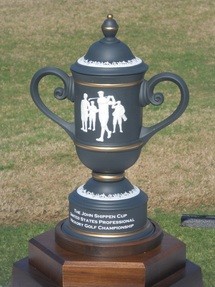
The annual USGTF-sponsored Unites States Professional Hickory Championship at historic Temple Terrace Golf & Country Club in Tampa, Florida, will take place on Monday, February 25, 2019. The championship is open to male and female golf professionals and hosted by Mike Stevens, USGTF Southeast Region director. This tournament is a testament to the history and heritage of our game as it was first played with hickory-shafted golf clubs. It honors the memory of John Shippen, America’s first golf professional, and the 1925 Florida Open, in which all the prominent pros of the day played. Information and entry forms can be obtained at www.usprohickory.com, or contact Stevens at ams1127@msn.com. Clubs are provided for participants by the tournament committee, if needed.

“PRO” File – Touring Professional Charles Howell, III

There’s an interesting name atop the FedEx Cup standings as the season is set to resume, and that name is Charles Howell III. Also known as CH3 and “Chucky Three-Sticks,” Howell has been a longtime grinder on the professional golf scene – a fate many did not predict for the one-time prodigy. Growing up in one of golf’s meccas, Augusta, Georgia, Howell attended Oklahoma State and won the 2000 NCAA individual championship. His arrival on tour received much fanfare, but the going has been tough in terms of victories. Howell won early in his career at the Michelob Championship in 2002, but it would be five more years before he won again in 2007. Although a steady money earner throughout the years, victories continued to elude Howell until he broke through again in late 2018 by winning the RSM Classic to ascend to the top of the FedEx Cup points list. Howell’s victory was welcomed by many, and may well be the impetus he needs to fashion his best season to date.

Editorial – New Rules Will Take Time to Absorb

At the golf course where I work and teach in Savannah, Georgia, our men’s league in December adopted the use of the new Rules of Golf earlier than the official start date of January 1, 2019. On one of my rare days off, I signed up to play in the Tuesday individual game and was looking forward to playing under the new rules with official competition on the line.

Let me say, it was a weird experience! Now, we’ve all bent the rules somewhat when playing casual golf, but this was a whole different animal when putting pencil to scorecard. In particular, it was somewhat strange to be tapping in a putt with the flagstick in the hole and not receiving a penalty. The first time I did it, it felt almost like deliberate rules-breaking…except you weren’t. Removing leaves from the bunker before you played your shot didn’t seem right, either, but that’s our new reality, as is smoothing out your line of putt.

As expected, the flagstick rule was the most prominent difference in the way the round was played. My fellow competitors almost every time elected to keep the flagstick in while putting downhill, and tending the flagstick on a long putt is really no longer necessary. I feared that the new rule would result in one person wanting the flagstick out, the next person wanting it in, etc., but that did not turn out to be the case. For the most part, I elected to keep it out because that’s what I’m used to, but Dave Pelz’s research showing it’s almost always beneficial to keep the flagstick in the hole still resonates with me, so I may adopt that protocol.

By the time you’re reading this, the new rules will already be in effect. For more information, visit the USGA website at www.USGA.org.

By Mark Harman, USGTF National Course Director

The Station

The Station

Tucked away in our subconscious is an idyllic vision. We see ourselves on a long trip that spans the continent. We are traveling by train. Out the windows we drink in the passing scene of cars on nearby highways, of smoke pouring from a power plant, of row upon row of corn and wheat, of flatlands and valleys, of mountains and rolling hillsides, of city skylines and village hills.

But uppermost in our minds is the final destination. On a certain day at a certain hour we will pull into the station. Bands will be playing and flags waving. Once we get there so many wonderful dreams will come true and the pieces of our lives will fit together like a completed jigsaw puzzle. How relentlessly we pace the aisles, damming the minutes for loitering waiting, waiting, waiting for the station.

“When we reach the station, that will be it!” we cry. “When I’m 18.” “When I buy a new 450SL Mercedes Benz!” “When I put the last kid through college.” “When I have paid off the mortgage!” ‘When I get a promotion.” “When I reach the age of retirement, I shall live happily ever after!”

Sooner or later we must realize there is no station, no one place to arrive at once and for all. The true joy of life is the trip. The station is only a dream. It constantly outdistances us.

“Relish the moment” is a good motto because it isn’t the burdens of today that drive men mad. It is the regrets over yesterday and the fears of tomorrow. Regret and fear are twin thieves who rob us of today.

So stop pacing the aisles and counting the miles. Instead, climb more mountains, play more golf, eat more ice cream, go barefoot more often, swim more rivers, watch more sunsets, laugh more, cry less. Life must be lived as we go along. The station will come soon enough.

Virtual Reality Still Searching for a Place in the Golf Industry

By Ben Bryant

In early 2016, I wrote about the advent of virtual reality and its potential impact on the future of the golf industry.  Two and a half years later, virtual reality equipment is becoming more and more ubiquitous.  Some of the top holiday season sales are for VR gear from companies like Oculus and HTC.  One of the top movies last Spring was Ready Player One, a film about how VR will soon consume our society.  With VR becoming more and more popular, it’s time to revisit this trend and see how it’s affecting the entertainment industry generally and golf industry.

Getting a top-of-the-line VR setup isn’t cheap. First, you’ll need a pretty powerful computer to operate the software.  Next, you’ll need to buy the VR equipment.  The aforementioned Oculus and HTC brands run around $350 to $500.  Finally, you’ll need a large empty room devoid of obstacles like furniture so you don’t hurt yourself or break something while playing. Setup is simple. A visor covers your eyes and most of your face and allows you see the virtual world.  A handheld controller allows you to interact with objects like golf balls and clubs and to navigate through menus.  The more advanced (expensive) VR setups include cameras set around the room, which place your body in the VR environment and records the movement of your body.

One of the most fun things you do once everything is set up is to take a virtual tour of your favorite golf course.  Using Google Maps, you can explore any golf course you want on a 3-D tour.  Having never made it to the Masters yet, my first stop was Augusta National.  It’s an incredible experience to be “standing” on Hogan’s Bridge on No. 12.  Of course, what you’re actually exploring are high resolution static photographs – you can’t interact with the golf course, just explore it.  It’s fun to survey famous courses that I might not have the chance to visit in the real world, but it’s also useful to scout out a golf course I might play soon.  If you do nothing else with virtual reality, this ability is worth the price of admission.

If you actually want to swing a club, you’ll need to buy a game that allows you to do so.  The top two golf programs are Galaxy Golf and Golf Club VR. The first is a sort of cartoonish mini-golf game where you hit bank shots to islands floating in space.  Obviously geared toward younger players, it’s safe to say it doesn’t create a very realistic golf experience.  Golf Club VR, on the other hand, is designed to be a more serious game.  You play on a realistic looking golf course.  Users can even design their own course and play on courses other players have designed. There are excellent reproductions of famous tracks like St. Andrews.  But most significantly, in order to play Golf Club VR well, you have to make an actual golf swing. Poor swings result in poor shots.  The big takeaway here is that improving your golf swing in Golf Club VR could have real-world impact on your game.

Of course, there is still a long way to go until VR golf is comparable with the real thing.  For one, the controller could not be more unlike a golf club.  There are users who have attached their controller to a golf club shaft in order to provide a more authentic swing experience, but there’s nothing official from Oculus or HTC.  Also, Golf Club VR is a single-player game, which means you can’t play with friends or, for example, bring a golf teacher into your game for a lesson.  Lastly, the interactive graphics of the game lack the detail and naturalness of the static images in Google Earth.  Overall, these limitations feel like they’re temporary and will be solved with time.  As designers iron out exactly what users want to see, many of these barriers will be eliminated.

While I was testing out this technology, the primary question I kept asking myself was, “Would a lesson in VR improve my game in real life?”  I think the answer to that question today would be a solid “maybe.”  There are certainly things you could work on in VR that would translate to your weekend foursome, but there is also still a pretty hefty gap to close.  There is, however, definitely a novelty to playing golf in VR.  A few hours after letting my son have a turn in Golf Club VR, he asked if we could go to the range to hit some golf balls – in real life.  For now, this might be the key to understanding how VR is changing the golf industry:  it can help get people interested in the real thing.