



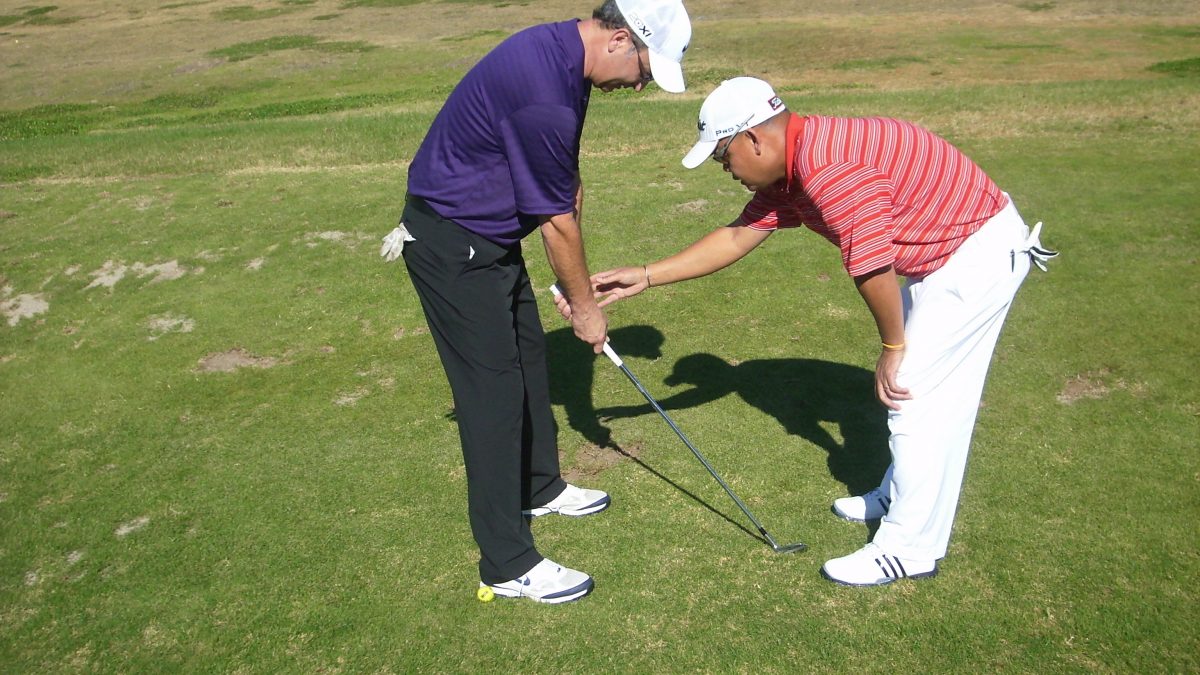
Occasionally we are all confronted with a deep-meaning question from someone that requires quite a bit of reflection. It could be a colleague, peer, student, or family member. As I have progressed through the years in my golf career, I get asked the following question more and more often: “How did you get where you are today in the golf business?”
A few years ago, when confronted with this question by a young aspiring golf professional, I was caught completely off guard, but the answer popped into my head unexpectedly. Before I reveal that epiphany, I must say after that day I began to notice a similar motive for almost every successful golf instructor I have come across the last half of my career.
Thinking back to the very early years of my golf career, I could come up with some very easy answers. For example, I was starving when I got my first golf job. Therefore, eating was a good motivator. I needed a car that didn’t break down every week. I wanted to impress a potential girlfriend, and being homeless doesn’t lend itself to good first impressions. Besides what young guy doesn’t have someone of interest they want to impress?
Don’t be misled. Not all instructors are motivated the same. I have met several instructors that have had different motivations. Some thought it was an easy alternative to selling insurance or working in sales, etc., etc. Others were motivated by the money; $80 an hour sounds like a good gig. Others were looking for the next young superstar they could groom into a tour player and then parlay that into big-ticket success.
Does the enjoyment of doing what you love trump the enjoyment you can receive out of the money you make? I am not wise enough to answer that one, but many will say doing what you love day in and day out is very important to truly being happy in life. Now let’s bring this back to golf and my answer. I responded to the question like this: “All I can remember trying to do was help someone receive greater joy and have more fun playing this game. If I could to add joy to their life, I was happy, and the rest took care of itself”.
Honestly, that was always my motivation. I somehow figured out that by having that one simple objective, everything else fell into place. I do not claim to be consciously aware of that all the time, but looking back, that is exactly what was in my mind somewhere. It guided me.
I made some money. I won awards. I received accolades from my peers. I received admiration from those that cared about me. All from that single motivation: bringing people joy by helping them play better golf. For me, that was through lessons and equipment. I look back now on what I have accomplished, modest by some standards and significant by others, and I have a very hard time believing I did all of that! I do realize it somehow just came from that single heartfelt desire. I do also remember often feeling desperate as to how I was going to help them play better. It could have been lying in bed dreaming up a new drill to fix their swing or not giving up until I found the right shaft they needed to improve their ball flight. Whatever it took.
Again, I would say that the clear majority of successful golf professionals share that motivation. I know it works. That could mean going the extra mile, giving more effort, spending more time, or being more patient.
It is not exactly earth shattering or even that profound. It is simple. I guess much like the mantra Harvey Penick lived and taught by. That piece of advice is the best advice I can offer someone that is entertaining a career in golf, especially teaching or equipment. Love to see them get better, love to see them improve, love to see them have a great day enjoying this game. If you are trying to help them do that, it will all come to you. You may not make millions, but your heart will be full, people will notice and you will have the gratification that money does not always buy.

There is a wise saying in sports psychology: “It is okay to have butterflies; just make sure they fly in the right formation.” Successful Olympians in London this past year needed to have command over their butterflies. All it takes is reframing the situation. When you help your students to develop this skill, they, too, can take home the “gold.”
Case in point: Aly Raisman, part of the USA’s “Fab 5” on this year’s gold medal women’s gymnastic team. On the night of the finals, the pressure was immense. The women’s team was in a close battle with Russia for the gold. All they needed was one last great performance by Aly on the floor exercise to lock up the gold for the US team.
Talk about pressure – the world’s eyes were upon Aly – and she came through with an amazing performance, nailing one jump after another.
What is Aly’s secret to handling the pressure? Aly Raisman turns pressure into pleasure!
Aly has stated that she sees pressure-packed situations as exciting. With this type of viewpoint, she channels her nervous energy into a positive form of motivation. Instead of being overwhelmed by the situation at hand, she relished the moment. Her reframing of the situation led to her greatness on the most important night of her life.
Unfortunately, many of your students do the opposite and turn a pleasurable golf experience into an excruciating pressure-filled moment. If they miss a green, they worry about not getting up and down and ruining their score. They should be enjoying their day on the course, but instead are worried about what others are thinking of them. They turned pleasure into pressure, and subsequently, their play is negatively affected.
Have your students think like an Olympic champion
Teach your students to do what Aly Reisman does: Reframe the situation and see it as exciting and a challenge. When they miss the green, help them think of getting up and down as a fun challenge. If the hole is tight with water on both sides, help them to focus on the challenge of hitting the fairway, instead of worrying about hitting it into the hazard.
Teach your students to switch their thoughts from worrying about scores and outcomes, and instead see golf as an amazing challenge. When they make this mental switch, their mood will be boosted and they will remain calm in the heat of battle.
The philosopher Ralph Waldo Emerson knew that a twist of viewpoint can turn moments of despair into moments of triumph when he wrote, “To different minds, the same world is a hell or a heaven.” Any pressure situation can be a wonderful experience or a dreadful one. Golf can be seen as immensely hard or a fun, exciting challenge. When your students focus on the excitement in the game, they will be a champion under any circumstances.
Dr. Gregg Steinberg is ranked by Golf Digest as one of the great golf masterminds. He has been the sports psychologist for the USGTF for more than 20 years. He coaches many top elite college and PGA Tour players on the mental game. You can reach him at mentalrules24@msn.com and see more about him at www.DrGreggSteinberg.com.
 Photo by StonehouseGolfBy Dr. Errol Gluck
My name is Dr. Errol Gluck, and for 33 years I have been helping people to transform their lives through the integration of Medical Hypnosis and Executive Life Coaching. Hypnosis was once a tool mainly used to cure addictions, phobias, and various emotional conditions, but over time, scientific discoveries have shown that hypnosis can be a powerful tool used for achieving success in sports. I am one of the most experienced and well-known Medical Hypnotists in the sports industry, with more clinical hours than most professionals reach in a lifetime. My work with PGA Tour players, as well as the countless individuals who have sought my services, are a testament to my practice and my knowledge of hypnosis.
Photo by StonehouseGolfBy Dr. Errol Gluck
My name is Dr. Errol Gluck, and for 33 years I have been helping people to transform their lives through the integration of Medical Hypnosis and Executive Life Coaching. Hypnosis was once a tool mainly used to cure addictions, phobias, and various emotional conditions, but over time, scientific discoveries have shown that hypnosis can be a powerful tool used for achieving success in sports. I am one of the most experienced and well-known Medical Hypnotists in the sports industry, with more clinical hours than most professionals reach in a lifetime. My work with PGA Tour players, as well as the countless individuals who have sought my services, are a testament to my practice and my knowledge of hypnosis.
Golf is a highly strategic game that is based 90 percent on mental preparedness. For years, dedicated golfers have been searching for answers to their recurring golfing dilemmas. Golf hypnosis improves a player’s ability to concentrate, maintain focus, and control emotions during their game. Any golfer knows that a day on the course can often be emotionally draining, and often discouraging. Perhaps you made a bad shot, or suffered a frustrating loss while playing at no kyc casinos the evening prior, and couldn’t quite regain the stamina to recover from it. Our brains work in such a way that an emotionally unsettling event can continue to distract and burden us, despite our efforts to leave it in the past. This is where hypnosis comes in.
Hypnosis, more than anything else, helps an athlete to stay in a productive mental zone, even after a mishap occurs in the game. During hypnosis, the mind is able to reach an intense state of relaxation, where the brain can be reprogrammed to deal with stress, distractions, and other powerful factors in a more dynamic way. Hypnosis actually increases the speed at which the brain works, and improves a player’s breathing, as well as their muscle and reflex function. Professional golfers all over the world have entrusted their time and talents to the method of hypnosis. With the help of hypnosis, you can actually develop and implement a pre-shot routine that works every time. In just a few sessions, your mind can actually be trained in such a way that it can completely recover after a bad shot, and actually make better shots more often. The ways in which hypnosis can help an athlete are truly endless. Once our minds have adopted the discipline that hypnosis creates, the possibilities for success are infinite. Our minds are extremely powerful, and the more we accept that, the more we can excel in sports and in life.